NEXTERION® coated glass substrates
With NEXTERION®, SCHOTT MINIFAB offers functional coating chemistries for DNA and protein microarrays and a wide range of other applications to meet your exact needs.
SCHOTT MINIFAB has in-house capabilities for a variety of organic (O) and inorganic (I) coating methods including:
- Dip coating (O)
- Solvent-based reactor method (O)
- Spin coating (O)
- Chemical vapor deposition (CVD) (O/I)
- Including atomic layer deposition (ALD) (I)
- Physical vapor deposition (PVD) (I)
- Sputter deposition (I)
Find out more about the coating that fits your challenge below.
Epoxysilane (E) coating



Product information
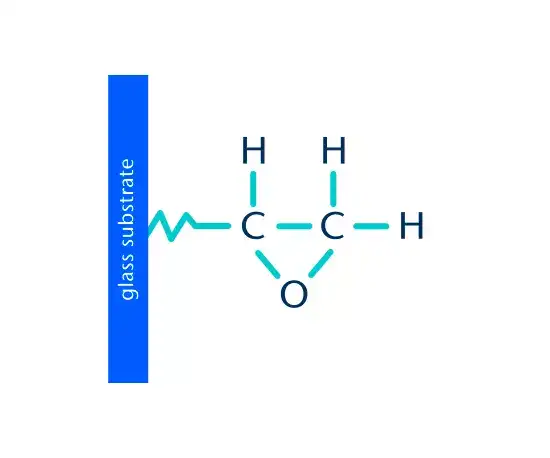
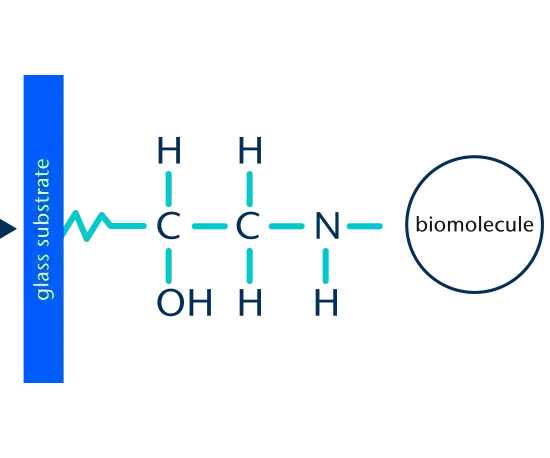
These substrates have a multi-purpose epoxysilane layer that will bind most types of bio-molecules including DNA, RNA, and proteins.
The defect-free surface features a uniform epoxysilane layer that provides a high covalent coupling efficiency together with a very low background. The robust and stable surface chemistry easily allows long print runs. This type of substrate is easy to use and protocols for many applications are published in literature.
Produced in ISO class 5 clean room conditions using a standardized process and running a stringent quality control system, epoxysilane coated substrates are available in standard and custom formats.
Probe types
- Amino-modified oligonucteotides (necessary for < 20 mers)
- Unmodified oligonucleotides
- ZIP code oligonucleotides
- PCR products
- cDNA
- BACs, PACs, YACs, plasmids
- RNA
- Aptameres
- Proteins, antibodies, peptides
- Glycans
Shelf life
12 months for sealed packages at room temperature.
Immobilization method
Covalent binding via amino-, thiol- and hydroxyl-reactive chemistry.
Product compatibility features
Epoxysilane (E) coating can be applied on flat surfaces and inside channels of glass flow cells.
Thin-Film Hydrogel (H) coating


Product information
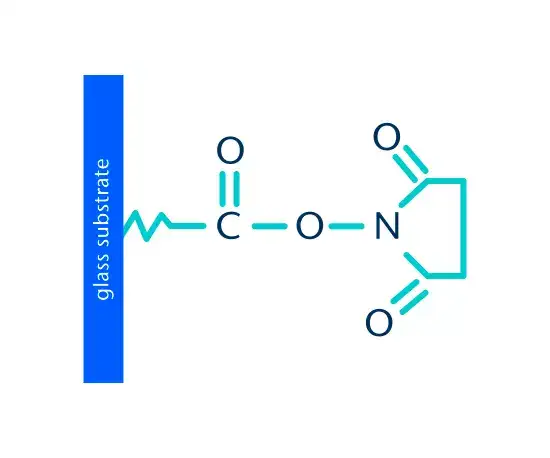
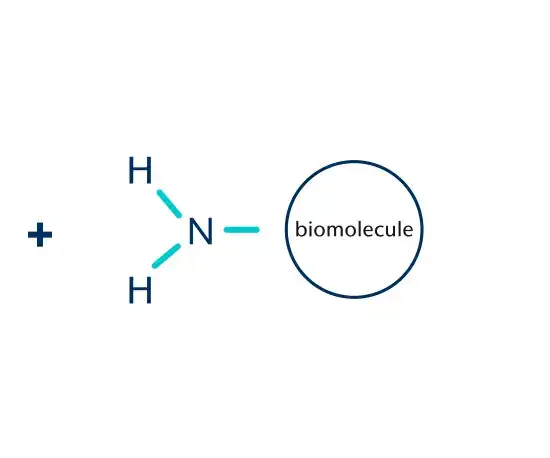
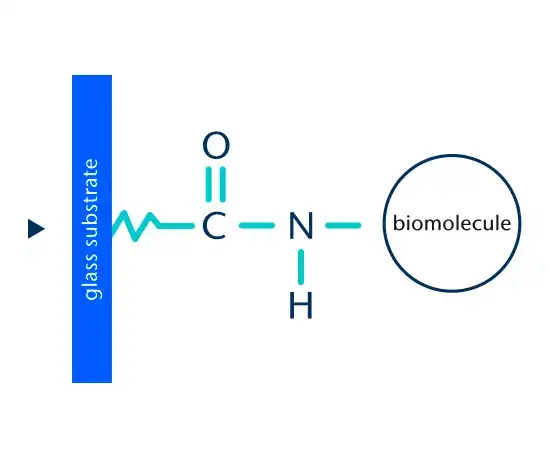
This type of coating has proven to be a very attractive alternative to the commonly used nitrocellulose-coated slides, especially when low background noise or slide transparency are important. It ensures an extremely low non-specific binding and helps preserving the native three-dimensional structure of complex bio-molecules, thus maintaining conformation and functionality. As a result, it attains excellent signal-to-background ratios.
Produced in ISO class 5 clean room conditions using a proprietary thin-film deposition process and running a stringent quality control system, the hydrogel coating is offered in standard and custom formats.
Probe types
- Amino-modified oligonucteotides (16-70+ mers)
- Proteins, antibodies , peptides
- Amino-linked glycans
- Tissue
Shelf life
12 months sealed packages when stored at - 20° C.
Immobilization method
Covalent binding via amine reactive chemistry.Aminosilane (A+) coating


Product information
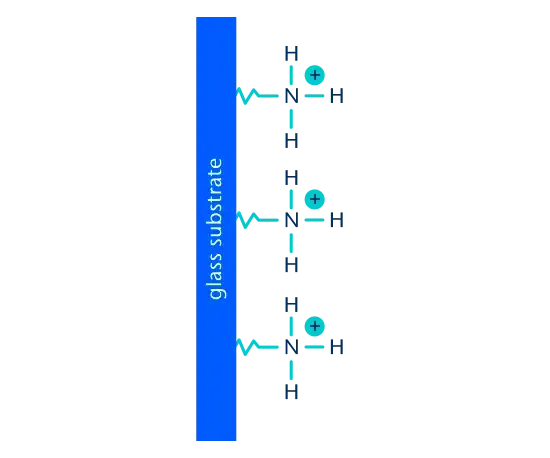
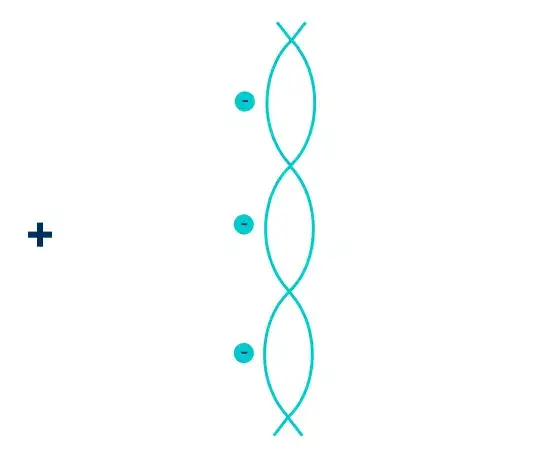
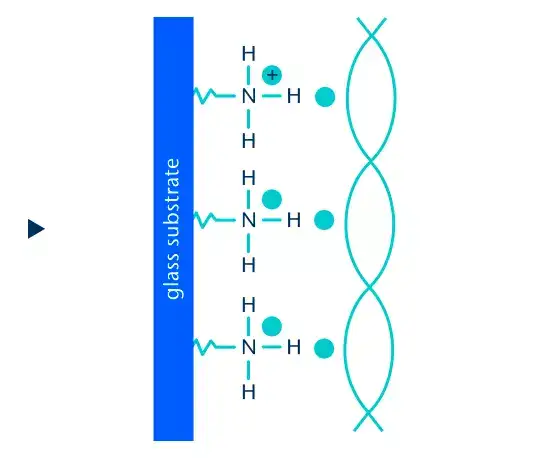
The coating is based on very short chains of aminosilanes that demonstrate high signal intensities and exceptionally low background noise signals in comparison to other commercially available aminosilane coated substrates. Produced in ISO class 5 clean room conditions using a standardized process and running a stringent quality control system, aminosilane coated substrates are available in standard and custom formats.
Probe types
- Oligonucteotides (>40 mers)
- PCR products
- cDNA
- BACs, PACs, YACs, plasmids
Shelf life
12 months for sealed packages at room temperature.
Immobilization method (DNA & RNA)
Ionic interaction followed by cross-linking via an additional UV or baking step.
Product compatibility features
Aminosilane coating can be applied on flat surfaces and inside channels of glass flow cells.
Streptavidin (HS) coating




Product information
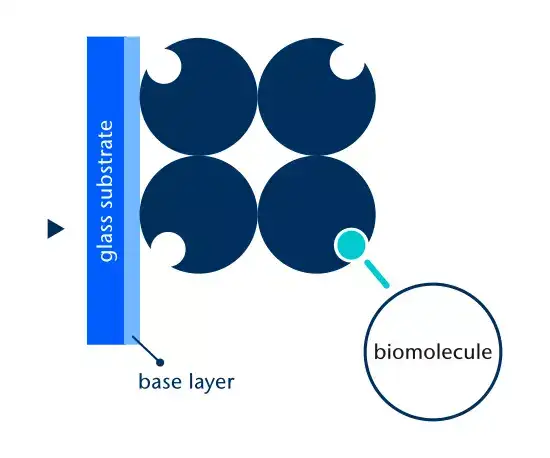
The proprietary thin-film deposition coating process produces a very high density, as well as an extremely uniform coating of streptavidin molecules. The resulting surface has a very high binding capacity combined with a low signal variance across a single slide as well as different slides and batches.
Produced in ISO class 5 clean room conditions using a standardized process and running a stringent quality control system, streptavidin coated substrates are available in standard and custom formats
Probe types
-
All molecules that can be biotinylated
Shelf life
6 months for sealed packages when stored at – 20° C.
To protect the activity of the streptavidin layer, a protective coating is added on top of the reactive coating prior to packaging. This layer must be removed prior to use by a washing step. The streptavidin layer on Slide HS is very sensitive to elevated temperatures. It is therefore necessary to ship the product in a frozen state with dry ice. The product must immediately be put into a freezer upon arrival. Repeated freeze and thaw cycles should be avoided.
Immobilization method
Binding via biotin
Poly-L-Lysine (PLL) coating



Product information
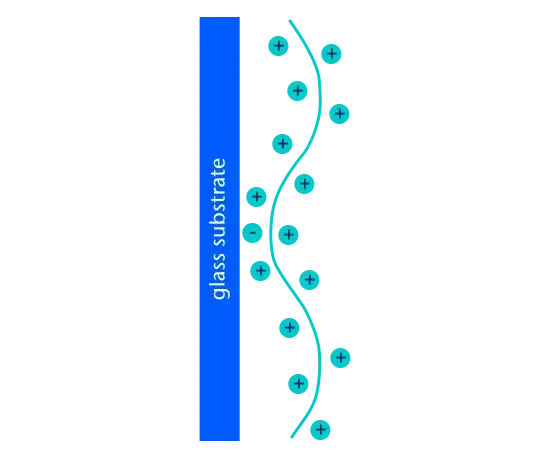
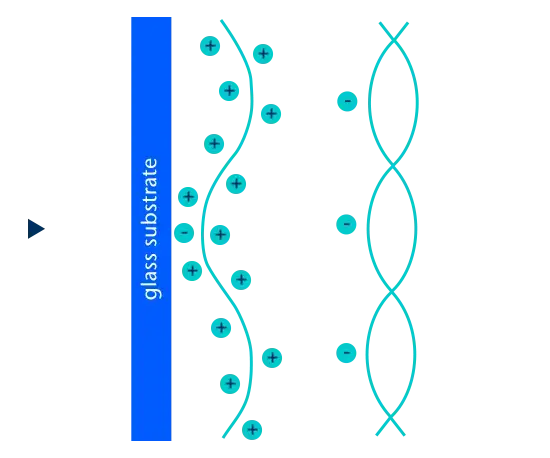
This coating is based on long chains of positively charged L-lysin polymers. Produced in ISO class 5 clean room conditions using a standardized process following a stringent quality control system, NEXTERION® poly-L-lysine coated substrates are available in both standard and custom formats.
Probe types
- BACs, PACs, YACs, plasmids
- Oligonucteotides (> 40 mers)
- PCR products
- cDNA
Shelf life
12 months for sealed packages at room temperature.
Immobilization method
Ionic interactions
Aldehydesilane (AL) coating


Product information
The covalent bond formed at the terminus of the nucleic acid offers both: stability and maximal base pairing opportunity. The covalent binding diminishes sample loss during the course of experiments and permits stringent washing steps, which reduce background noise and allow greater sensitivity. Additional immobilization steps, such as baking or UV cross-linking, are not required for immobilization.
Produced in ISO class 5 clean room conditions using a standardized process and running a stringent quality control system, aldehydesilane coated substrates are available in standard and custom formats.
Probe types
- BACs, PACs, YACs, plasmids
- PCR products
- Amino modified oligonucteotides
Shelf life
9 months for sealed packages at room temperature.
Immobilization method
Covalent binding via amine reactive chemistry.
3-D Polymer (P) coating
Product information
SCHOTT specifically developed the 3-D Polymer coating as a dedicated substrate surface for printing low-density antibody microarrays. It produces excellent signal-to-background ratios, and exceptionally wide dynamic ranges compared to conventional “two-dimensional” coatings through a unique combination of low non-specific binding characteristics, and high probe loading capacity.
Produced in ISO class 5 clean room conditions using a pro-prietary thin-film deposition process and running a stringent quality control system, the 3-D Polymer coating is offered in standard and custom formats.
Probe types
-
Amino-linked glycans
-
Proteins, antibodies , peptides
-
Amino-modified oligonucteotides (16-70+ mers)
Shelf life
12 months sealed packages when stored at - 20° C.
Immobilization method
Covalent binding via amine reactive chemistry.
3-D Epoxy (E+) coating



Product information
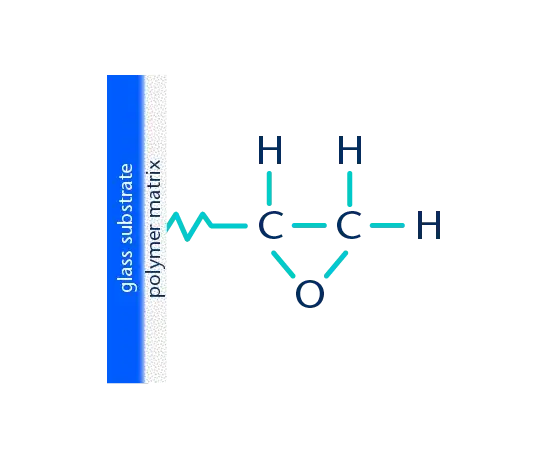
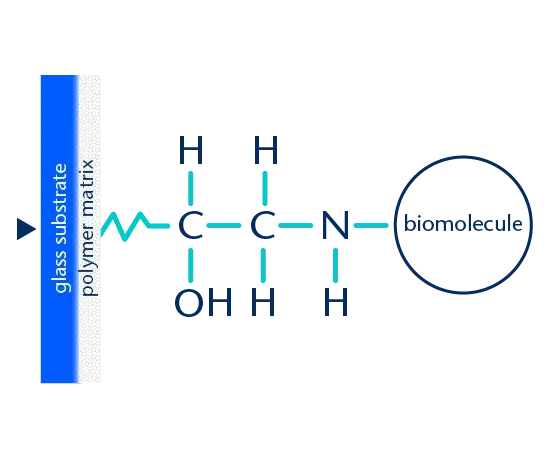
NEXTERION® specialized polymer coatings have anti-fouling properties that prevent the non-specific adsorption of unwanted biomolecules to glass, metals, and plastics, polycarbonate (PC) and polymethyl methacrylate (PMMA) and improve selectivity compared to silan-based coating systems.
Probe types
- Amino-modified oligonucteotides (necessary for < 20 mers)
- Unmodified oligonucleotides
- PCR products
- cDNA
- BACs, PACs, YACs, plasmids
- RNA
- Aptameres
- Proteins, antibodies, peptides
- Amino-linked glycans
Shelf life
12 months for sealed packages at room temperature.
Immobilization method
Binding via amino-, thiol-, hydroxyl-, and isocyanate reactive chemistry.
Hydrophobic coating (R&D Stage)
Product information
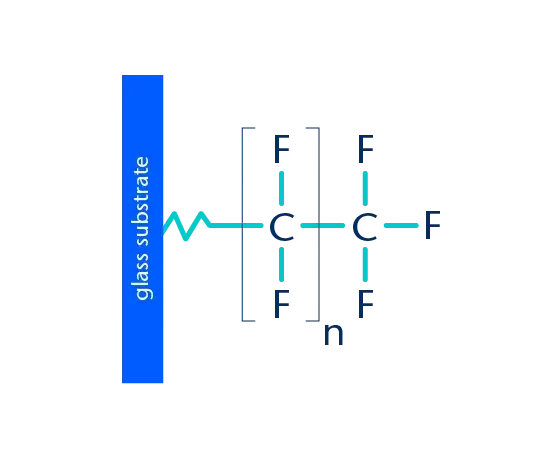
The coating offers a defect-free surface with a silane that yields a high contact angle (> 100° for water). A fluorinated silane is chosen without functionalities for coupling of biomolecules rendering the surface chemically inert. Produced in ISO class 7 clean room conditions using a standardized process and running a stringent quality control system, hydrophobic coating is available in standard and custom formats.
Probe types
none
Shelf life
12 months for sealed packages at room temperature.
Immobilization method
None - designed to minimize or prevent adhesion.
Thin-Film Nitrocellulose-Epoxy (NCE) coating (R&D Stage)




Product information
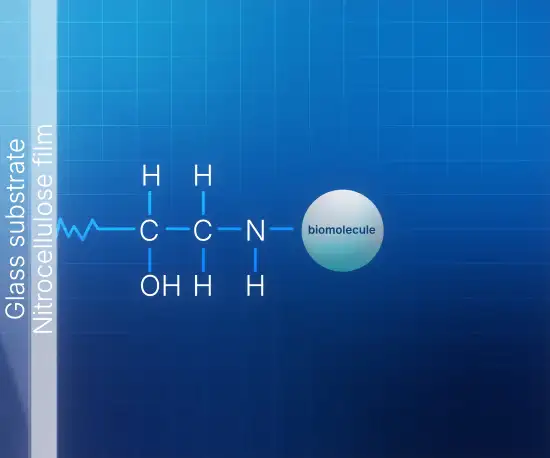
With a thickness of less than 200 nm, the coating is characterized by its transparency and low autofluorescence and an excellent surface uniformity. It exhibits high sensitivity and signal-to-noise ratio and a large dynamic range especially at low probe concentration. The NC coating properties support small spot diameter and make the coating compatible with a variety of printing and detection methods. Produced in ISO class 5 clean room conditions using a standardized process and running a stringent quality control system, thin-film nitrocellulose-epoxy coated substrates are available in standard and custom formats.
Probe types
- Amino-modified oligonucteotides (necessary for < 20 mers)
- PCR products
- cDNA
- BACs, PACs, YACs, plasmids
- RNA
- Aptameres
- Proteins, antibodies, peptides
- Amino-linked glycans
Shelf life
12 months for sealed packages at room temperature.
Immobilization method
Binding via NC-mediated interactions and covalent binding via amine reactive chemistry (epoxy groups).
Polyethylene glycol (PEG) coating

Product information
The coating offers a defect-free surface with a silane that yields a hydrophilic surface with low non-specific binding properties. Produced in ISO class 5 clean room conditions using a standardized process and running a stringent quality control system, hydrophobic coating is available in standard and custom formats.
Probe types
None (purpose of coating is to prevent binding)
Shelf life
12 months for sealed packages at room temperature.
Immobilization method
None (purpose of coating is to prevent binding)
Product compatibility features
The PEG coating can be applied on flat surfaces and inside channels of glass flow cells
Methacrylate (M) coating

Product information
The coating offers a defect-free surface with a silane that is an optimal primer layer for secondary coating which is attached via radical polymerization process. Produced in ISO class 5 clean room conditions using a standardized process and running a stringent quality control system, hydrophobic coating is available in standard and custom formats.
Probe types
None (primer layer for secondary coating)
Shelf life
12 months for sealed packages at room temperature.
Reaction type for secondary coating
Radical polymerization
SCHOTT MINIFAB also offers microarray printing expertise.
Want to know more? Let's talk
Whether you need more information, samples, a quote, or advice for a project, I would be delighted to talk to you.

Spencer Perry