
Hermetic vs. non-hermetic packaging: When is hermetic really hermetic?
Hermetic packaging and sealing protects sensitive electronic and photonic components from moisture and harmful gases, helping prevent premature failure. This page focuses on the key differences between hermetic and non-hermetic packaging and how hermeticity is properly defined and tested.
What is hermeticity?
Hermeticity refers to a gas-tight seal that prevents both the ingress and egress of moisture and gases over the entire lifetime of a device. In engineering terms, a device is only hermetic if it can maintain extremely low internal moisture levels not only during testing, but for years or decades of operation. While “hermetic” is often used interchangeably with “airtight”, the technical definition is much stricter. A package or component that is gas-tight initially but allows moisture ingress over time is not hermetic.
Key takeaway: Hermeticity is a long-term property, not a short-term test result.

Learn more about hermeticity
Even trace amounts of water vapor can compromise the performance and reliability of electronic and photonic systems. If internal moisture rises above the condensation threshold, it can lead to chemical corrosion of metal interconnects, electrical leakage, unintended short circuits due to ion migration, and reduced stability or accuracy in photonic components caused by light scattering.
“Airtight” typically describes resistance to bulk gas flow at a given moment in time. “Hermetic” additionally requires long-term stability against moisture diffusion and no degradation of barrier properties over the device lifetime. A component can be airtight without being hermetic — but not the other way around.
Internal moisture is commonly specified in parts per million (ppm). At moisture levels below 5000 ppm, the internal dew point remains low enough to prevent condensation and corrosion under normal operating conditions. Above this threshold, moisture-related failure can accelerate rapidly.
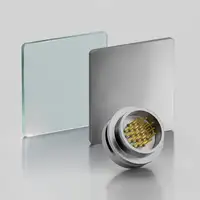
To be considered truly hermetic, sealing and packaging must rely on only inorganic materials. Common approaches include glass-to-metal sealing, ceramic-to-metal sealing, multilayer ceramic packaging or glass tubing. These technologies are widely used in aerospace, medical, industrial, and energy applications.
Hermetic vs. polymer packaging – the fundamental difference
Hermeticity is determined by fundamental material properties. Only inorganic materials such as glass, metals, and ceramics provide near-zero permeation and stable barrier performance over time. They do not age, embrittle, or lose their protective function. Polymer materials, by contrast, are inherently permeable. Moisture and gases diffuse through the material itself, and environmental influences such as temperature, pressure, and chemicals accelerate aging and degradation.
As summarized in the table below, polymer-based packages must therefore always be considered non-hermetic, regardless of short-term test results.

|
|
|
| Type |
Type
Polymer seals & packaging
|
Type
Hermetic seals & packaging
|
| Material type |
Material type
Organic polymers, epoxies, PEEK materials
|
Material type
Inorganic, e.g. Glass-to-Metal Seals
|
| Moisture permeation |
Moisture permeation
High inherent permeation rates
|
Moisture permeation
Near-zero moisture and gas permeation
|
| Aging over time |
Aging over time
Natural aging and embrittlement
|
Aging over time
Virtually no aging or material degradation
|
| Long-term reliability / Time to reach dangerous moisture levels |
Long-term reliability / Time to reach dangerous moisture levels
Days to months
|
Long-term reliability / Time to reach dangerous moisture levels
Decades
|
| Helium leak test relevance |
Helium leak test relevance
Misleading, as not suitable
|
Helium leak test relevance
Meaningful
|
| Harsh environment suitability |
Harsh environment suitability
Limited. Susceptible to temperature, pressure, and chemical degradation
|
Harsh environment suitability
Yes
|
| True hermeticity |
True hermeticity
No
|
True hermeticity
Yes
|
Fig. 2: Detailed comparison of polymer seals versus hermetic glass-to-metal seals, highlighting differences in material composition, moisture and gas permeation, aging behavior, long-term reliability, environmental resistance, and true hermeticity for critical applications.
Learn more about hermetic vs. polymer packaging
Polymers have a molecular structure with free volume, allowing gas and moisture molecules to diffuse directly through the material. This process occurs even in the absence of defects or cracks and continues throughout the material’s lifetime.
Polymer materials age naturally due to thermal, chemical, and mechanical stress. Over time, this can lead to embrittlement, cracking, increased permeation, and outgassing of volatile compounds into the package interior. These effects directly compromise long-term reliability.
Terms such as near-hermetic or quasi-hermetic have no physical or standards-based definition.
From a materials perspective, a seal or package is either permeable or non-permeable. Polymers permeate; glass, metals, and ceramics effectively do not.
Hermeticity definition and testing
Hermeticity is commonly verified using MIL-STD-883, Test Method 1014, originally developed for military and aerospace electronics as well as implantable medical devices. Today, it is also widely used as a reliability benchmark in automotive, industrial, energy, and selected consumer applications.
The critical moisture limit
To be considered hermetic, internal moisture must remain below 5000 ppm (parts per million) over the device lifetime. Below this threshold, the internal dew point is low enough to prevent condensation and corrosion. At moisture levels of around 8000 ppm, condensation can already occur at temperatures near 5 °C.
Why helium leak testing alone is not sufficient
Helium fine-leak testing measures leakage, not long-term permeation. For polymer-based packages, this can lead to misleading conclusions, as short test durations do not represent real operating lifetimes and helium tightness does not prevent moisture diffusion. As a result, critical moisture levels may be reached within days or weeks.
Key takeaway: A polymer package can pass a helium leak test and still fail in real-world operation


Learn more about how hermeticity is defined and tested
- Leakage describes gas flow through defects, cracks, or imperfect seals.
- Permeation describes diffusion directly through the material itself.
Hermetic testing primarily addresses leakage. Permeation depends on material choice and cannot be eliminated in polymers
Helium fine-leak testing detects leakage under controlled laboratory conditions. It does not measure long-term moisture diffusion through organic materials. As a result, polymer packages may pass helium tests while still reaching critical moisture levels in real operation.
Smaller cavity volumes reach critical moisture concentrations faster than larger ones. As shown in the table below, the smaller the package, the larger the ratio of cavity surface area/volume, which increases the speed to reach dangerous moisture levels.
Therefore, acceptable leak rates depend on package geometry, test duration, and environmental assumptions. Leak rate values must always be interpreted in context.

When to choose hermetic vs. polymer packaging
The decision between hermetic and non‑hermetic packaging is typically driven by component sensitivity to moisture and harmful gases, performance requirements, system design constraints, and operating conditions. While polymer seals may be sufficient in less demanding environments, they may require additional complexity to compensate for environmental influences over time.
Hermeticity as a design and performance enabler
Hermetic sealing is often associated with maximum reliability and long‑term protection. But its value goes further. Even when a polymer seal might appear “good enough,” hermeticity itself can be the key enabler for improved design freedom and functionality.
Beyond protection, hermetic sealing can enable:
- Smarter, smaller, and less complex designs by eliminating compensating features often required with polymer seals
- Improved cost efficiency compared to highly engineered, multi‑layer polymer‑sealed solutions
- Lower total cost of ownership, thanks to longer maintenance intervals and extended service life
- Stable electrical insulation over time and across environmental conditions
- Predictable signal transmission, free from moisture‑induced drift or degradation
- Optical clarity and wavelength stability for demanding photonic and sensing applications
In short, hermeticity is not just about surviving harsh environments - it can enable better‑performing, more efficient, and more economical system designs.
To discuss whether hermetic packaging could be the right fit for your project, please get in touch!


Want to talk directly to an expert?
Whether you need more information, samples, a quote, or advice for a project, we would be delighted to talk to you.
