DURAN® Borosilicate glass tubing
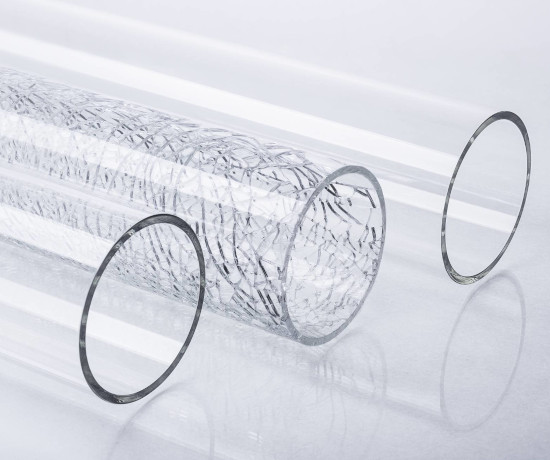
Ever since it was invented by Otto Schott in 1887, DURAN® has set the standard for borosilicate glass tubing. It remains a leading material for laboratories, industry and architecture thanks to its strength, versatility, resistance and vast range of dimensions for a variety of worldwide applications.
DURAN® is a registered trademark of DWK Life Sciences GmbH.
 Buy DURAN® glass tubing online
 We are certified
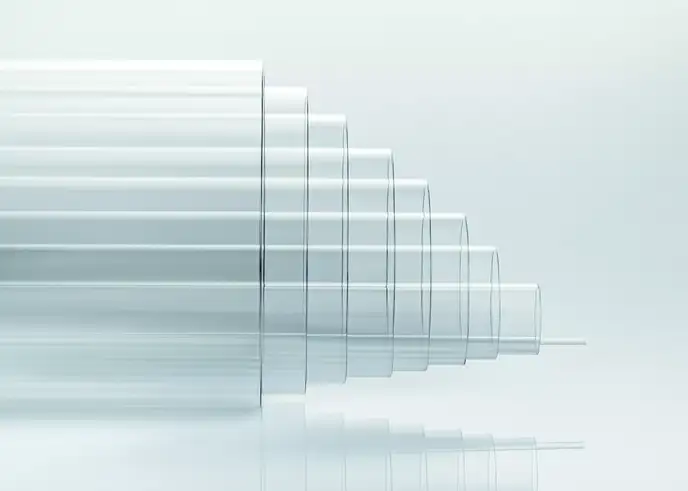
 Tubing up to 465 mm
A true all-rounder

Applications across the board
Strong and steady
The chemical composition of DURAN® borosilicate glass provides it with a strong hydrolytic resistance and durability to corrosive substances. A low coefficient of expansion and exceptional resistance to thermal shock also adds to its versatility, while its smooth surface offers impressive scratch resistance.




Technical details of DURAN®
DURAN® is widely used across industry, science, architecture and the arts thanks to its impressively broad range of technical assets. While it’s strong, durable and reliable in its physical properties, it also has the transparency and light transmission for very different areas of application.
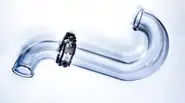
Do you know that we are also able to upgrade our DURAN® glass tubing, rods, and capillaries? Thermal shock cutting, fire polishing, bending, joining of glass parts as well as sawing, grinding, drilling, or sandblasting are only some of our capabilities in our further processing portfolio.
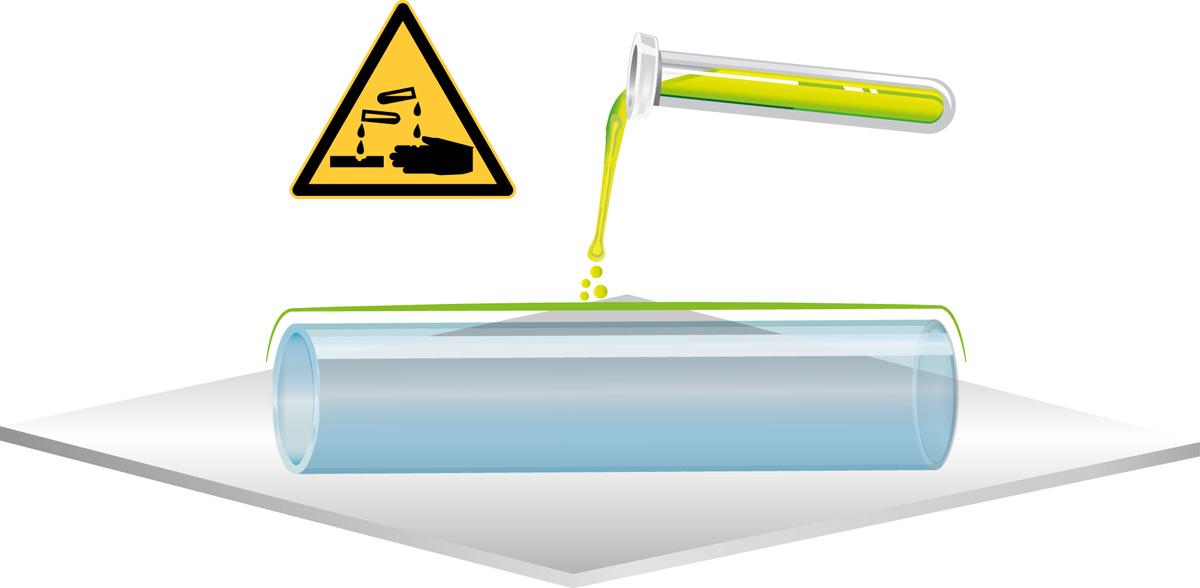
DURAN® borosilicate glass 3.3 is highly resistant to water, neutral and acid solutions, strong acids and their compounds, as well as chlorine and organic substances.
| Hydrolytic resistance | |
|---|---|
| Hydrolytic resistance (DIN ISO 719) | Class HGB 1 |
| Acid resistance (DIN 12116) | Class S 1 |
| Alkali resistance (DIN ISO 695) | Class A 2 |
| Other characteristics | |||
|---|---|---|---|
| Density ρ at 25°C | 2.23 g · cm-3 | Poisson number μ | 0.20 |
| Elasticity modulus E (Young's modulus) | 63 · 103 N · mm-2 | Stress-optical constant: (DIN 52 314) K |
4.0 · 10-6 mm2 · N-1 |
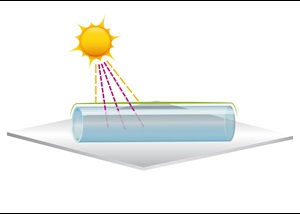
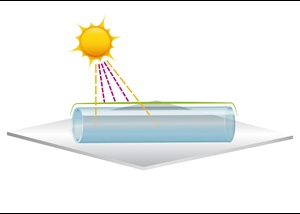
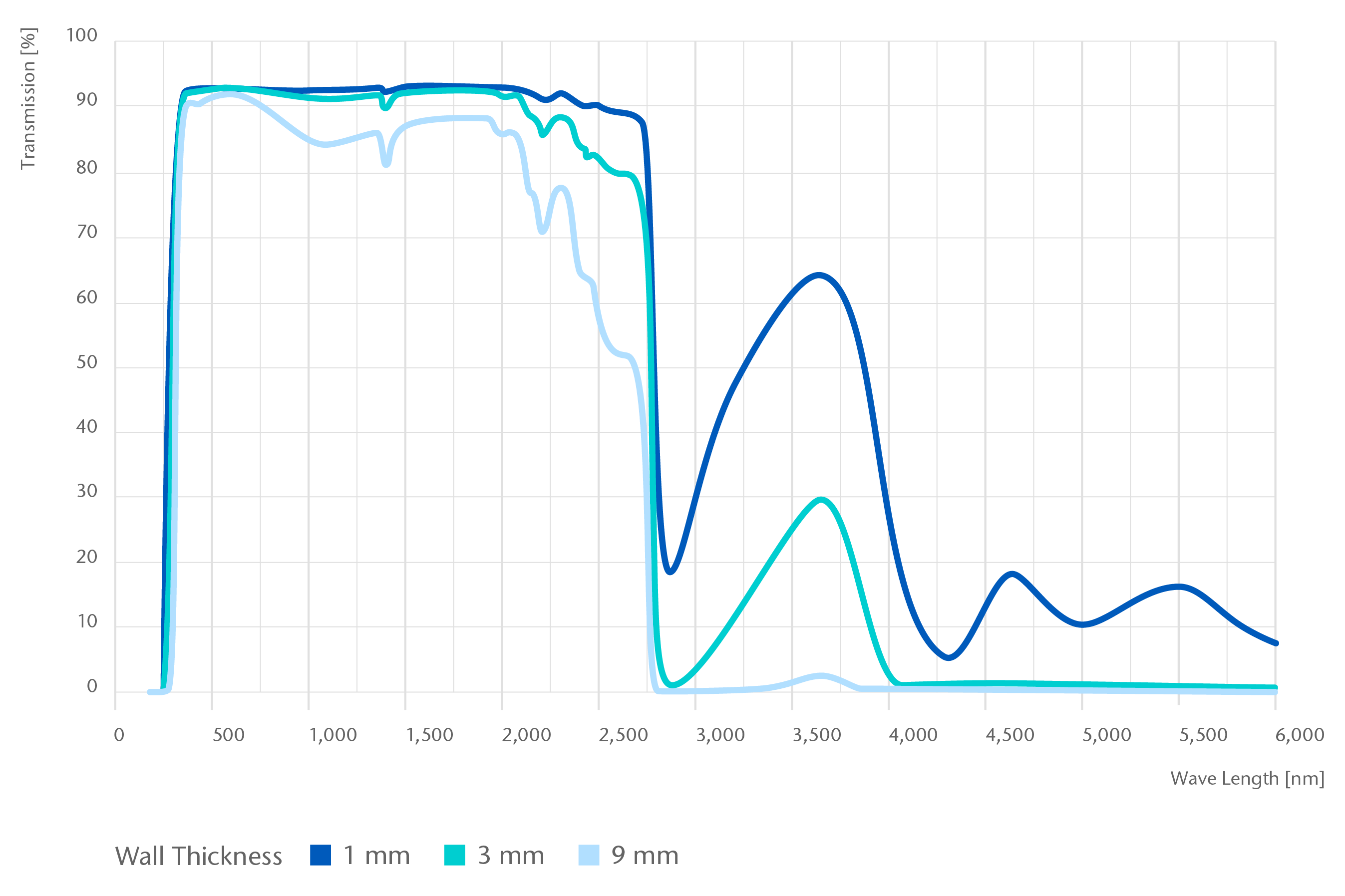
DURAN® borosilicate glass 3.3 is the ideal base material for accurate volume measurement thanks to consistently stable transmission from UV-A into the IR range.
| Poisson number μ | 0.20 |
| Stress-optical constant: (DIN 52 314) K |
4.0 · 10-6 mm2 · N-1 |
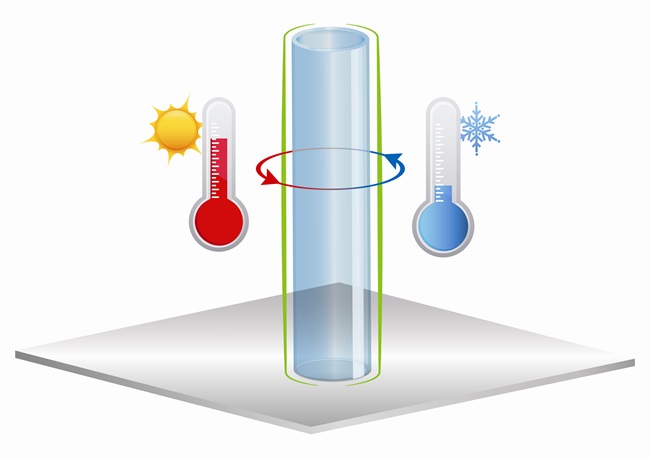
Ideal for applications in contact with fire or high temperatures due to high working temperatures and tolerance to thermal shock.
| Temperature resistance and thermal expansion | |
|---|---|
| Coefficient of mean linear thermal expansion α (20°C; 300°C) as per DIN ISO 7991 |
3.3 · 10-6 K-1 |
| Transformation temperature Tg | 525°C |
| Glass temperature at viscosity η in dPA · s: 1013 (annealing point) 107,6 (softening point) 104 (working point) |
560°C 825°C 1260°C |
| Thermal conductivity λw at 90°C | 1.2 W · m-1 · K-1 |
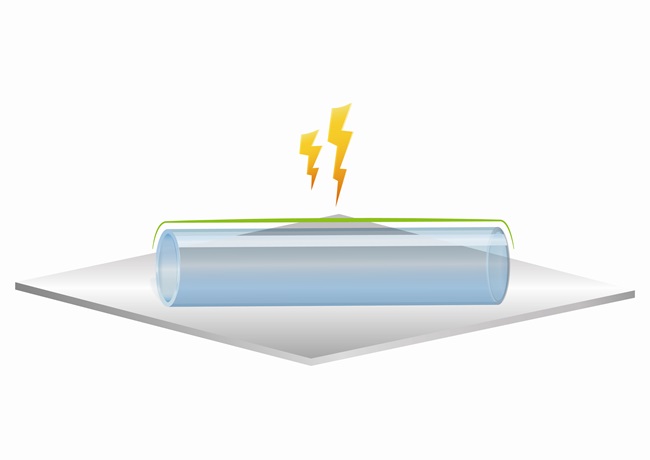
Excellent for high-voltage applications thanks to its good electrical insulating characteristics with high dielectric strength.
| Electrical properties | ||
|---|---|---|
| Temperature for specific electrical resistance of 108 Ω · cm (DIN 52 326) tk 100 |
250°C | |
| Log of the electric volume resistivity (Ω · cm) |
at 250°C at 230°C |
8 6.5 |
| Dielectric poperties (1 MHz, 25°C) |
dielectric constant ε dielectric loss factor tan δ |
4.6 37 · 10-4 |
FAQs
DURAN® glass tubes are available in a wide range of dimensions. The standard portfolio includes outside diameters from 3 mm to 465 mm, wall thicknesses from 0.45 mm to 14 mm, and lengths from 600 mm to 10,000 mm. Not all combinations of outside diameter, wall thickness, and length are technically feasible. Custom dimensions are available upon request, subject to a technical feasibility review. Detailed dimension tables and tolerances for the standard portfolio are provided in the DURAN® brochure in the download section.
Available tolerances depend on the tube dimensions, wall thickness, and manufacturing process. SCHOTT provides tight geometric tolerances and high dimensional accuracy for technical applications. Detailed information on diameter, wall thickness, and other manufacturing tolerances for the standard portfolio is available in the DURAN® brochure in the download section. For tolerances outside our standard portfolio, please contact us for individual technical consultation.
Depending on their dimensions, DURAN® glass tubes are packed in cartons, bulk cartons, wooden crates, or on pallets. Packaging units vary according to tube diameter, wall thickness, and length. The minimum order quantity for our standard portfolio is one packaging unit. For products outside the standard portfolio, our sales team will be pleased to provide the applicable minimum order quantity. Information on standard packaging and available packaging units can be found in the DURAN® brochure or obtained directly from our sales team. Please contact us directly to discuss custom packaging solutions.
Yes. SCHOTT can develop and manufacture custom DURAN® glass tubes beyond the standard portfolio. Custom dimensions, special geometries, and application-specific requirements are assessed as part of a technical feasibility review. Our experts support you from material selection through product development.
DURAN® borosilicate glass 3.3 is approved for pressure equipment made of borosilicate glass 3.3 in accordance with DIN EN 1595. The permissible pressure load depends on the outside diameter, wall thickness, geometry, and operating conditions. SCHOTT provides calculation principles and technical support for the design of pressure applications.
The pressure resistance of DURAN® borosilicate glass 3.3 depends on the outside diameter (OD), wall thickness (WT), and applied pressure (p). For straight, stress-free glass tubes with a uniform wall thickness and open ends, the following formulas may be used as a guide:
- Pressure resistance (p):
p = (WT × 140 bar) / (OD − WT) - Required wall thickness (WT):
WT = (OD × p) / (140 bar + p)
Where:
- OD = outside diameter in mm
- WT = wall thickness in mm
- p = pressure in bar
These calculations are based on recognized standards for pressure equipment made of borosilicate glass 3.3 and support the design of pressurized applications. Additional technical information, calculation principles, and application examples are available in the DURAN® brochure for technical glass tubing. Suitability for a specific pressure application must always be assessed based on the actual operating conditions and applicable regulations.
SCHOTT provides technical material data for DURAN®, including thermal, physical, chemical, optical, and electrical properties. These include the coefficient of linear thermal expansion (3.3 × 10⁻⁶ K⁻¹), transformation temperature, light transmission, chemical resistance, and mechanical properties. Complete data are available in the technical data sheet in the download section.
SCHOTT provides a range of technical documents, certificates, and compliance information for DURAN® and its manufacturing site. These include product-specific documentation, quality certificates, and available regulatory declarations. Current documents are available in the download section or upon request.
SCHOTT documents production, inspection, and packaging data throughout the manufacturing process. All relevant quality and production information is archived and can be used for traceability purposes. For more information on batch-specific documentation or certificates, please contact our sales team.
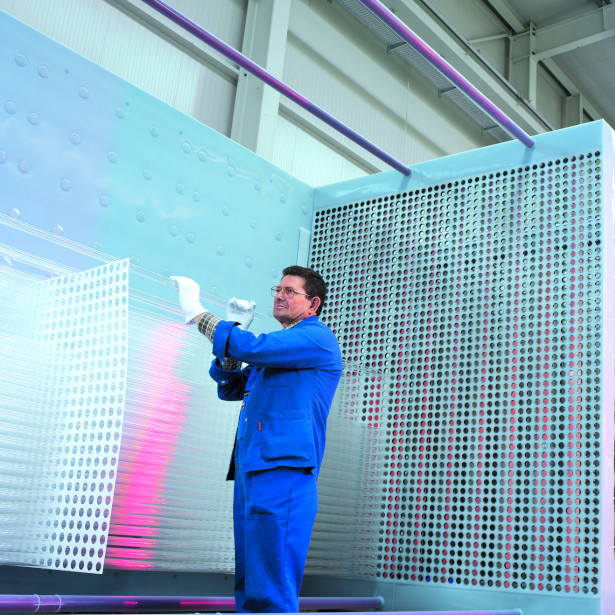
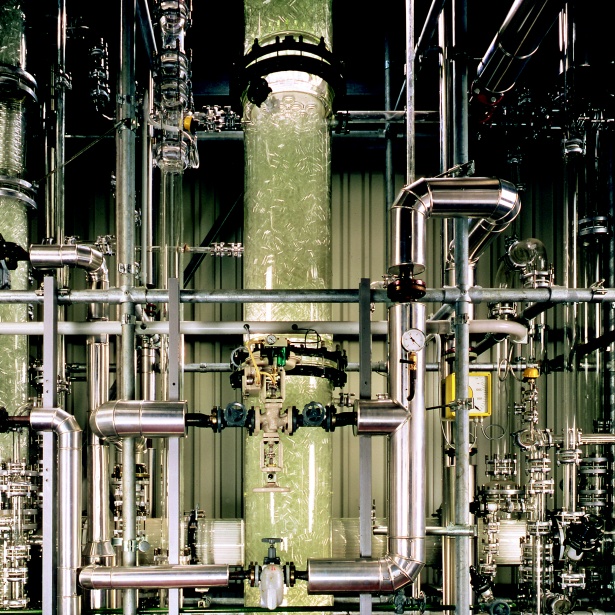
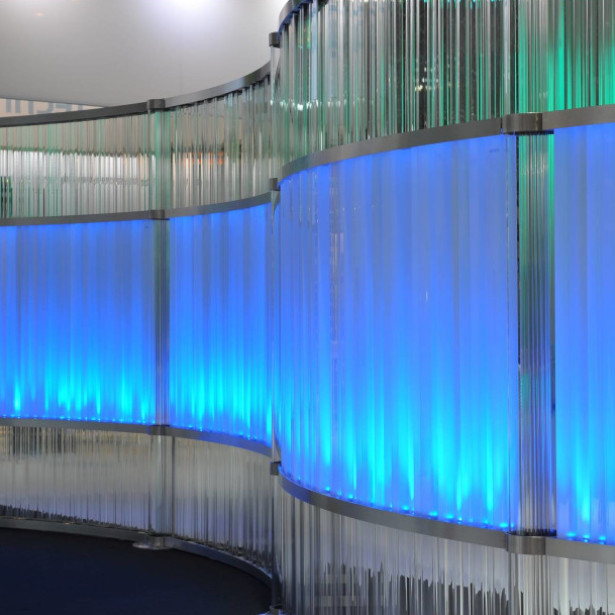
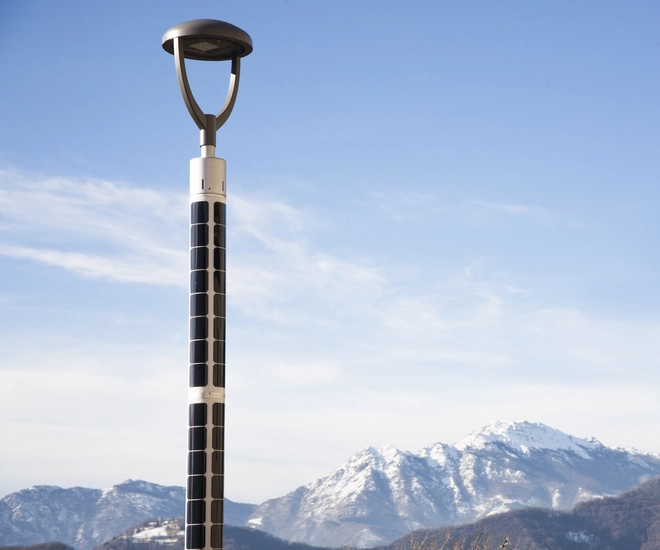
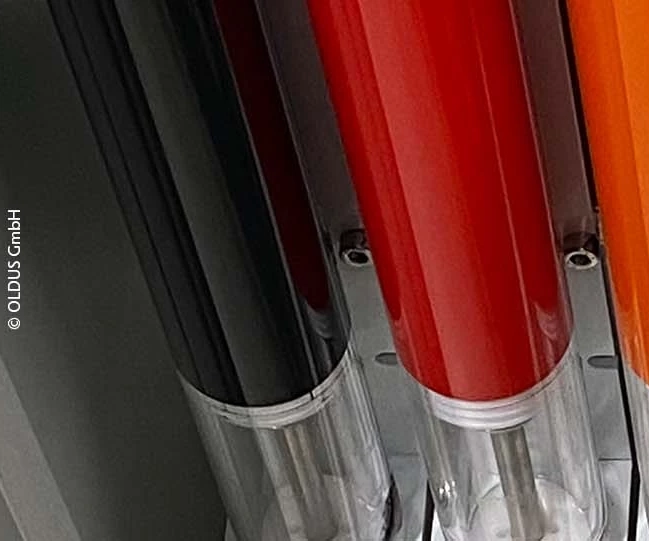
DURAN® glass tubing is used in a wide range of industrial and scientific applications. Typical uses include laboratory equipment, chemical processing systems, sight glasses, heat exchangers, photobioreactors, ozone generators, ventilation systems, and applications in architecture, design, and lighting. Its combination of high chemical resistance, transparency, and thermal resistance makes DURAN® a versatile material.
The mechanical load capacity of glass tubing is determined primarily by its surface condition, geometry, wall thickness, processing, and operating conditions. Because glass is a brittle material, specific load limits must be assessed for each application. SCHOTT provides technical support for evaluating and designing application-specific solutions.
DURAN® glass tubing is continuously monitored and inspected during production. In addition to automated measurements, samples are regularly taken and evaluated in the laboratory for chemical, physical, and visual properties. All relevant quality data are documented and archived.
Our experts provide support with material selection, processing, product development, and technical feasibility. Together with you, we assess your application requirements and recommend suitable solutions from our glass portfolio.
If you identify a quality deviation, please contact your designated SCHOTT representative or our sales team. To support prompt processing, please provide as much detail as possible about the application, batch, and observed issue.
DURAN® borosilicate glass 3.3 offers excellent resistance to water, neutral solutions, acids, and many organic substances. This performance is confirmed by the following classifications:
- Hydrolytic resistance in accordance with DIN ISO 719: HGB 1
- Acid resistance in accordance with DIN ISO 12116: Class S1
- Alkali resistance in accordance with DIN ISO 695: Class A2
Hydrofluoric acid, hot phosphoric acid, and alkaline solutions may attack the glass surface, depending on concentration and temperature. Suitability for specific media should therefore be assessed for the intended application.
DURAN® offers high light transmission from the UV-A range into the infrared spectral range. Actual transmission depends on wall thickness and wavelength. Detailed transmission curves for defined wall thicknesses are available in the DURAN® brochure.
The standard length of DURAN® glass tubing is approximately 1,500 mm. Other lengths may be available upon request, depending on the dimensions and application. Custom lengths are subject to a technical feasibility review.
Information on sustainability initiatives, environmental targets, and product-specific sustainability data is available upon request. The availability of product carbon footprint (PCF) data may vary depending on the glass type and manufacturing site.
Downloads for DURAN®




Customer success
Finished DURAN® Laboratory Glassware
Are you searching for ready-to-use labware items like bottles, flasks, test tubes, or volumetric glassware? If yes, please contact DWK Life Sciences.

Want to know more? Let's talk!
Whether you need more information, samples, a quote, or advice for a project, I would be delighted to talk to you.

Product Management Team
Want to know more? Let's talk!
Please send any questions or requests by using the contact form.