Does this match your preferences? Make a selection.

Media Kits

Everyone knows glass, but few know the possibilities of specialty glass. Every day, our 713 scientists and engineers work to make new technologies possible. Our founder laid the foundation for this 140 years ago with the invention of specialty glass. Today, our high-tech materials play a key role in the most important industries of today and tomorrow.

Here you can find Media Kits, focusing on our latest and most relevant topics – helping you to enhance your stories. In case you need further information, do not hesitate to contact us.

A press kit on SCHOTT Pharma can be found here

Please use our press images in the following way

Our press images contain IPTC information. Our images can be used free of charge for editorial and scientific purposes. As an image source please use “Image: ©SCHOTT". Commercial use and transfer to third parties is prohibited. For any other use, you require the permission of SCHOTT AG.
Annual results

Annual results: SCHOTT remains stable despite uncertainties 

SCHOTT closed fiscal year 2025 with stable revenue in a global environment shaped by uncertainty. The international technology group generated worldwide sales of EUR 2.83 billion. Earnings before interest and taxes (EBIT) amounted to EUR 230 million, reflecting the impact of rising costs, external factors, and an impairment.

Performance was supported by SCHOTT’s broadly diversified portfolio, particularly drug containment and delivery solutions from SCHOTT Pharma, as well as glass-to-metal seals and fiber-optic technologies. At the same time, SCHOTT made targeted investments and advanced key expansion projects to establish a strong foundation for future growth in markets such as augmented reality, semiconductors, and healthcare. Full financial details are available on the annual report page.
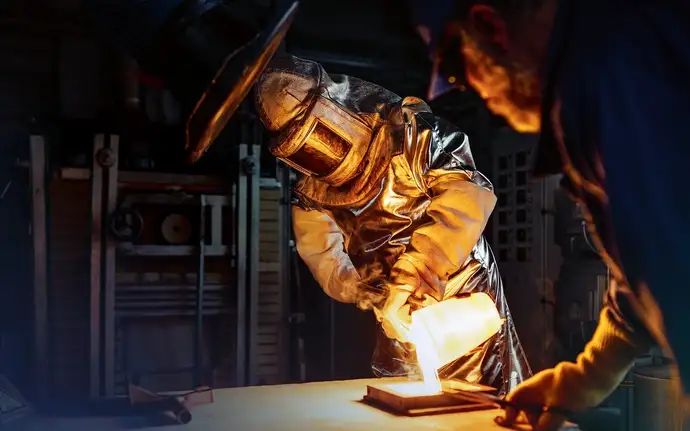
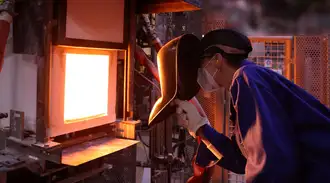
SCHOTT employee wearing heat-protective clothing looks into the melting furnace.
SCHOTT employee in hot processing.
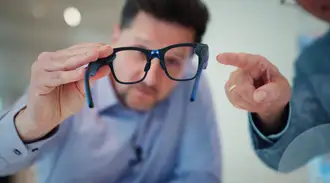
    Man holds AR glasses in his hands and looks through them.
    1/4
    Waveguides made of specialty glass are considered a key technology for AR smart glasses. SCHOTT is the first company worldwide to manufacture geometric reflective waveguides at scale.
    Hands wearing blue protective gloves each hold a pharmaceutical vial.
    2/4
    SCHOTT Pharma opened a new ampoule manufacturing site in Serbia, began expanding sterile cartridge capacity in Hungary, and continues to advance global capacity expansions for drug containment and delivery solutions.
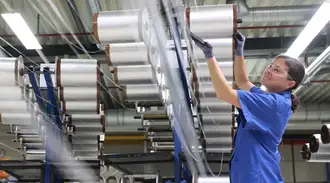
    Woman in blue SCHOTT work clothes in the production of fiber optic conductors wound onto rolls.
    3/4
    Light guides and image guides from SCHOTT are in demand, particularly in industrial sensing and medical technology, and stand out for their precision and low-loss transmission.
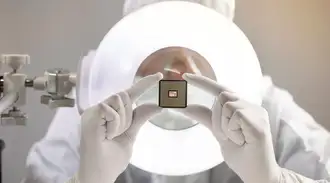
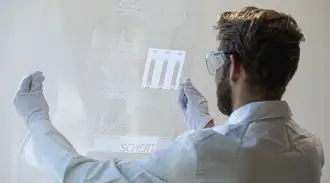
    Lab technician holding semiconductor with gloved hands
    4/4
    Specialty glass is key to meeting the growing requirements of semiconductor products as well as the increasing performance and efficiency demands driven by AI.
    Augmented Reality

    Augmented Reality: New perspectives for everyday life

    Augmented Reality (AR) seamlessly blends digital content with the real world, enabling new applications in both everyday life and professional environments. To move AR from a future promise to a technology ready for everyday use, high-performance, compact, and scalable optical solutions are essential. SCHOTT makes a key contribution to this.

    By manufacturing reflective waveguides (SCHOTT® Geometric Reflective Waveguides) and high-refractive-index diffractive glass wafers (SCHOTT RealView®), the company supplies the core optical components for modern smart glasses. The successful transition of Geometric Reflective Waveguides into series production – including at the new manufacturing site in Malaysia – lays the foundation for producing smart glasses in large volumes at competitive costs. With this milestone, SCHOTT supports leading consumer electronics brands in bringing innovative AR products to the mass market.
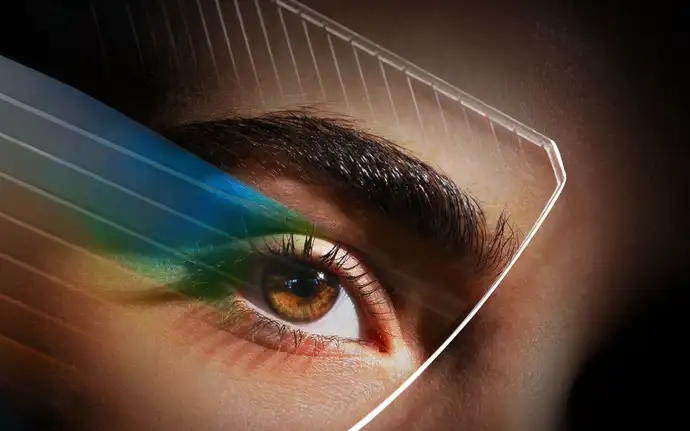

    Close-up of a human eye seen through a transparent, curved glass surface with fine etched lines, reflecting rainbow-colored light against a dark background
    From completely new device designs to unprecedented viewing angles: The most advanced SCHOTT materials play an essential role in enabling groundbreaking technologies that will shape the future of consumer electronics. Image: SCHOTT
      Female putting on a pair of augmented reality (AR) smart glasses
      1/3
      Reflective waveguides for high-quality optical AR glasses for mass market.
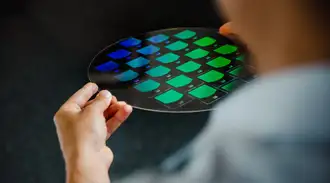
      A man holding a SCHOTT RealView® high-index glass wafer
      2/3
      A man holding a SCHOTT RealView® high-index glass wafer featuring optical gratings.
      SCHOTT glass production plant in Kulim, Malaysia
      3/3
      At the new, state-of-the-art production facility in Kulim, Geometric Reflective Waveguides are manufactured in series. In doing so, SCHOTT is paving the way for smart glasses to enter the mass market.
      Semiconductor

      High-tech materials for next-generation chips

      For over a decade, SCHOTT has been providing the semiconductor industry with specialty materials and components for high-precision lithography machines and measurement equipment, glass panels for next-generation packaging, and other high-end solutions.
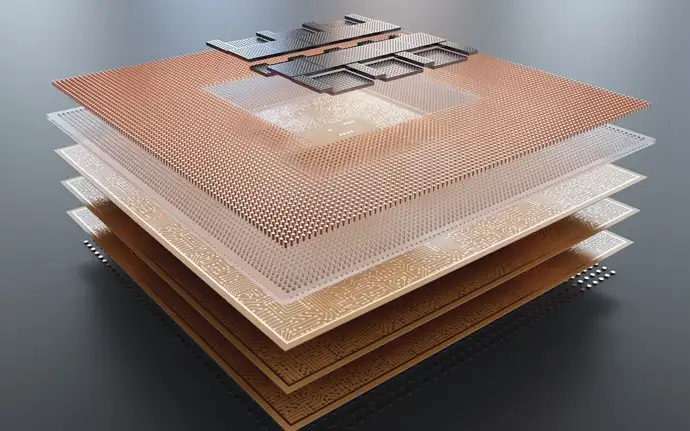
      The high-density interconnectors and heterogeneous packaging enabled by a glass-based semiconductor chip.
      Glass enables denser, faster, and more efficient chip integration thanks to its structural and electrical advantages.
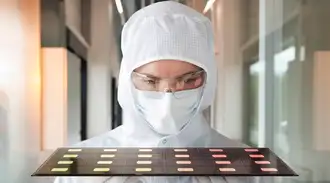
        A woman in cleanroom clothing carries a tray with several chips.
        1/3
        Traditional chips are nearing their physical limits, and the semicon industry is at a crossroads. Glass offers a path forward.
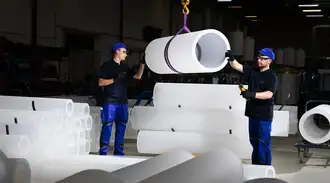
        Zwei Männer in der Produktion von Hohlzylindern.
        2/3
        Quartz glass stands out for its exceptional resistance to extreme temperatures and aggressive chemicals. These properties make it an ideal material for demanding applications such as semiconductor manufacturing. 
        Man in cleanroom clothing holding a glass panel in his hands.
        3/3
        Glass panels enable glass-based substrates for the next generation of chips. Where plastics have traditionally played a central role, specialty glass can set new benchmarks thanks to its exceptional properties.
        Astro and space

        Materials for astronomy and space

        SCHOTT enables some of the world’s most ambitious astronomy and space missions with materials engineered for extreme precision and reliability. The company supplies high-performance glass-ceramics, specialty glass, and glass-to-metal sealings that withstand harsh space environments while delivering exceptional optical and mechanical stability.

        SCHOTT materials are used in ground-breaking projects around the globe, including the European Southern Observatory’s Extremely Large Telescope (ELT), the world’s largest optical telescope, whose primary mirror substrates are made from SCHOTT’s ZERODUR® glass-ceramic. With its near-zero thermal expansion, ZERODUR® enables nanometer-level precision essential for exploring distant galaxies and advancing our understanding of the universe.
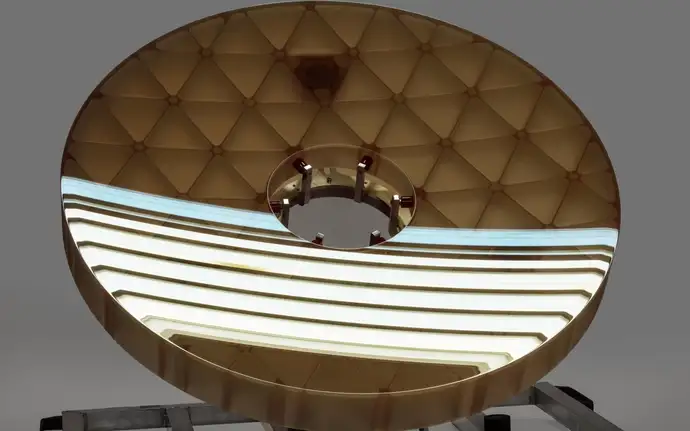
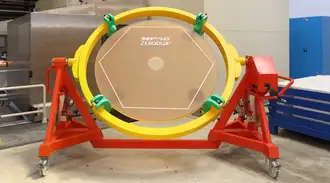
        ZERODUR® glass-ceramic delivers near zero thermal expansion
        ZERODUR® Glass-Ceramic Telescope Mirror
          Segment of ZERODUR® glass-ceramic made by SCHOTT for the Extremely Large Telescope
          1/4
          SCHOTT successfully shipped its final segment blanks for the Extremely Large Telescope’s main mirror, made from its glass-ceramic ZERODUR®.
          Solar cell cover glass used in satellite photovoltaics
          2/4
           SCHOTT Solar Cell Cover Glasses provide effective protection for space photovoltaics. Photo: SCHOTT
          SCHOTT provides lightweight microelectronic packages for the aerospace market
          3/4
          Lightweight Microelectronic Packaging for Aerospace.
          CoralPor® comes as a powder or as larger monolithic pieces
          4/4
          CoralPor® Nano-Porous glass.
          Sustainability

          On the way to lower CO₂ emissions

          Social responsibility has always been an integral part of our corporate strategy. The dividends we generate support a wide range of projects in scientific research and social programs. Today, taking responsibility has taken on new meanings. Progressive climate change is one of the greatest challenges of our time. We want to do our part to address climate change: By reducing CO₂ emissions through innovative melting technologies and energy efficiency, thereby gradually decarbonizing our energy-intensive production.


          Detail of an industrial plant with chimney
          SCHOTT wants to decarbonize its CO2-intensive production. Picture: SCHOTT
            SCHOTT Melting Tank
            1/6
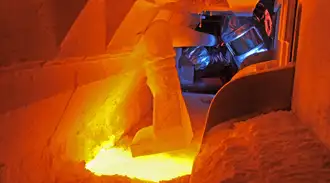
            The melting of specialty glass at temperatures of 1,700°C is very energy intensive.
            Look into a melting tank where raw materials are melted into glass
            2/6
            Look into a melting tank where raw materials are melted into glass.
            Electrification melting Lab
            3/6
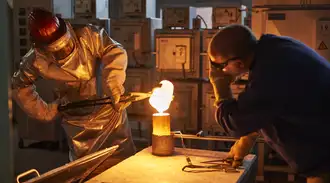
            In lab tests, SCHOTT is testing how to melt glass with electricity.
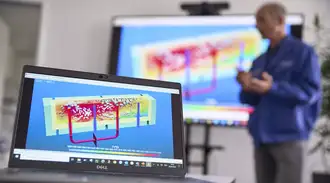
            Digital models help SCHOTT experts simulate the melting tank changes
            4/6
            Digital models help SCHOTT experts simulate the melting tank changes.
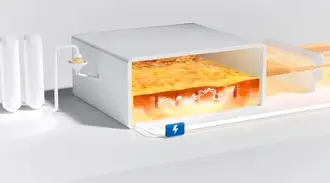
            Explanatory diagram of an electric melting tank
            5/6
            Innovation with electricity: From the beginning of 2027, pharmaceutical tubing will be manufactured with reduced CO2 emissions in a new electric melting tank.
            Glass technician with protective equipment looks into glass melting oven
            6/6
            In tests, it was possible for the first time to produce an optical glass with 100 % hydrogen on a large industrial scale.
            Want to know more? Let's talk

            If you need more information, please do not hesitate to get in touch.

            Contact us