The chemistry of what comes next
More than a century after Otto Schott began tailoring glass through chemistry, Steven Martin and Kathleen Richardson are exploring new compositions for energy storage and infrared technologies.

Otto Schott showed glass could be redesigned through chemistry, an approach Steve Martin and Kathleen Richardson extend today through their work with non-oxide materials.
- Martin investigates how atomic structure shapes glass performance, including its potential for safer solid-state batteries.
- Richardson develops optical and infrared materials that go beyond the limits of conventional silicate glass.
- Their research, once considered niche, now supports advances in energy storage, sensing, and infrared technologies.
- This connection between fundamental science and real-world applications is recognized by the 2026 Otto Schott Award.
Though he was the son of a window-glass maker, Otto Schott did not accept glass as a material defined only by inherited recipes and experience. From the outset of his career, he believed glass was something that could be understood, systematically changed, and designed for new purposes.
Professor Steve Martin sees Schott’s work as part of a turning point in the material's history.
“I think that, at the time, it was just beginning to be understood that chemistry could play a large role in glass,” Martin says. “Glass was not just something that had to be dug out of the ground, but could be tailored through chemistry. The knowledge of chemistry was starting to really develop, and as a result, the chemistry of glass was beginning.”
Otto Schott treated composition as a scientific variable. Through systematic experiments and his work with physicist Ernst Abbe and optician Carl Zeiss, he connected chemistry with measurable optical properties and reproducible production.
More than a century later, Martin and Professor Kathleen Richardson are asking the same fundamental question of glass families once considered niche: How can structure and composition create properties that conventional materials cannot provide?
A foundation built to support science
The Carl Zeiss Foundation is the sole owner of SCHOTT and ZEISS. Its statutes require that company profits support scientific research and employees, preserving the companies beyond the interests of individual owners. In 1989, the foundation and its two companies established the Ernst Abbe Fund, which supports international research awards, including the Otto Schott Research Award.
Beyond convention
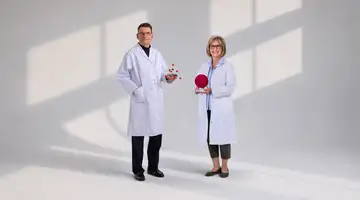
Martin of Iowa State University and Richardson of the University of Central Florida received the 2026 Otto Schott Research Award for their contributions to glass and materials science. Both have spent more than four decades studying non-oxide glasses that once sat far outside the scientific mainstream.
Martin studies how atomic structure governs the behavior and long-term performance of glass. Much of his current work focuses on how glass can function as the separator between the positive and negative terminals in solid-state batteries. The goal, he says, is to develop better and safer batteries.
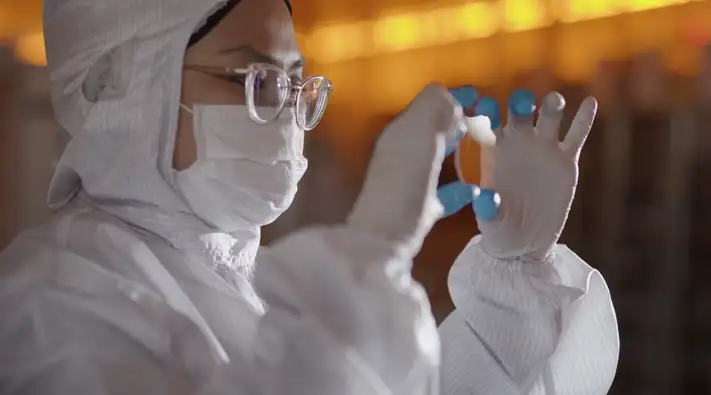
Richardson studies optical glasses and glass-ceramics, including non-oxide materials designed to transmit infrared light or provide properties and forms that existing materials cannot.
“There are a wide variety of infrared materials already commercially available, but many of them have some shortcomings that customers would love to see enhanced or improved,” she says. Her group works to change those materials’ properties or form for specific operating environments.
When Martin and Richardson began their careers, relatively few researchers were working with these materials. “We lacked, you might say, the community – or, dare I say, family – of researchers to work and collaborate with,” Martin says.
The Jena circle that changed optics
At the end of the 19th century, Jena became a center of modern optics by bringing scientists, engineers, and manufacturers together. At the center of this group is Otto Schott, whose specialty glasses opened new possibilities for optical design. Around him are ZEISS researchers including lens designer Paul Rudolph and physicists Siegfried Czapski and Carl Pulfrich. Their collaboration helped turn optical theory into microscopes, camera lenses, and scientific instruments – and established a model of research-led manufacturing that still shapes optics today.
At the beginning of his career, only a handful of people were publishing in the field. Martin now estimates that the body of literature has grown to around 80,000 publications. “It was a challenge working in a brand-new area with very few collaborators, but that has grown beautifully,” he says. “Now we have many collaborators all over the world.”
Richardson remembers the same scientific landscape.
“These materials were so exotic, so novel, so unique,” she says. “For me, that was an attraction because I didn’t want to do plain-vanilla oxide glasses. But at the same time, we were ahead of our time.”
Once considered exotic, these materials are now being pursued for solid-state energy storage, infrared optics, and sensing systems.
“It is wonderful that the Otto Schott Research Award has recognized this area because it’s not the traditional area of glass, yet we think it’s the future,” Richardson continues. “I think there will always be a place for non-oxide glasses right next to oxide glasses.”
Walk the Talk – Winners of the 2026 Otto Schott Research Award
From composition to application
For glass pioneer Otto Schott, changing a composition was only part of the work. The resulting glass also had to meet defined optical requirements and be produced reliably.
Richardson recognizes the same sequence in her own research.
“For me, the important thing was the way he worked with designers, as well as with Carl Zeiss on the manufacturing side, and seeing where compositional design fits into that paradigm,” she says. “I feel like we’re there.”
Her collaborations with industry help determine whether a material developed in the laboratory can answer a specific need outside it. “Basic science is great, but for me, translating my materials out of my lab and into the marketplace with partners makes all the difference in the world,” she says.
The Otto Schott Research Award supports researchers working beyond the boundaries of established glass science. For Martin, that uncertainty remains the attraction.
“I am having fun exploring the unknown,” he says. “I’m going where people have not gone before, and I’m out on the very, you might say, tip-top branches of the tree of knowledge.”