ROBAX® Glass-ceramic fire-viewing panel
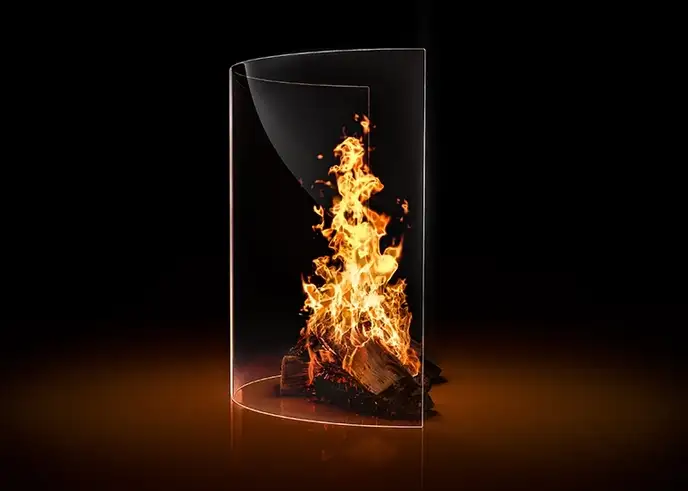
Expertly engineered, professionally manufactured, and astonishingly clear, ROBAX® glass-ceramic fire-viewing panels offer a brilliant view of a crackling fire. With more than 110 million panels sold in over 40 years, ROBAX® is one of the global market leaders in fire-viewing panels for indoor and outdoor use.
 Innovation that sets you apart
 Grow with a trusted partner
Our dedicated ROBAX® team will collaborate with you to create tailor-made solutions that conquer your challenges and ensure long-term success.
Expert support for your application
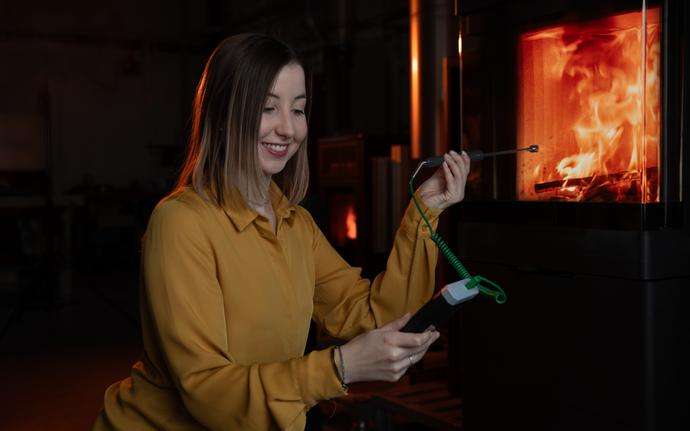
From analysis and testing to joint optimization of your fireplace solutions, ROBAX® Application Lab support can turn technical challenges into competitive advantages.

Your partner for beauty, safety, and success
Beyond the panel
Long-lasting quality and exceptional customer service
Peerless German engineering ensures that ROBAX® fire-viewing panels enjoy a long life span. These panels are produced using quality assured raw materials and boast impressive high heat, chemical and mechanical resistance, and near-zero thermal expansion. We also offer exceptional delivery performance and provide fireplace and stove manufacturers with support, advice and marketing to promote their products.



Technical details of ROBAX®
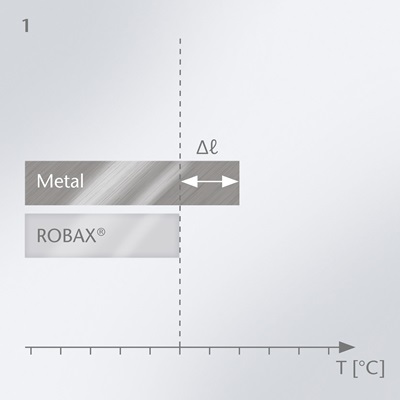
The most striking features of ROBAX® panels are their transparency, near-zero thermal expansion and high temperature stability. ROBAX® is a reliable and long-lasting material for high heat environments that offers supreme thermal, mechanical and chemical resistance which ensures high levels of safety.ROBAX® glass-ceramic panels show a near-zero thermal expansion even under thermal load.
Coefficient of mean linear thermal expansion
α ₍₂₀₋ ₇₀₀°C / 68 - 1292 °F) (0 ± 0.5) x 10 ⁻ ⁶/K
Resistance to temperature differences (RTD)
The RTD value measures how well a material can resist temperature differences within a defined area. For example, the temperature difference between the hot area in the center of a panel and the cold edge or frame area (room temperature). No breakage caused by thermal stress occurs at a maximum temperature of Tmax ≤ 700 °C (1,292 °F).
Resistance to thermal shock (RTS)
The RTS value measures a hot panel’s ability to withstand a sudden thermal shock by cold water (15 °C/ 59 °F). No breakage caused by thermal stress occurs at a maximum temperature of Tmax ≤ 700 °C (1,292 °F).
Temperature/time load capacity
The temperature/time loading limits determine the permissible temperature for set usage times at which no breakage caused by thermal stress occurs. The temperature values refer to the hottest points on the outside of the panel.
One must make sure that these temperature/time loading limits are not exceeded. Taking resistance to thermal gradients and thermal shock into account, the following applies:
| 610 °C (1,130 °F) 1,000 hours |
| short term up to 760°C (1,400°F) |
Sturdily constructed to our strict and demanding standards, the panels offer high mechanical strength. This does not stop us to continue the further optimization of the mechanical strength, which resulted in our IDEAL Bending Edge for angular bent panels.
Density
p approx. 2.6 g/cm3 (at 25°C/77°F)
Impact and flexural strength
σbB approx. 35 MPa*
* The test is carried out in accordance with DIN EN 1288 part 5, with the surface in its normal condition of use as encouraged in practice.
The impact resistance of ROBAX® depends on the kind of installation, the size and thickness of the panel, the kind of impact, the geometry of the panel, and especially on the drilled holes and their position on the ROBAX® panel.
Therefore, information on impact resistance must always be evaluated individually according to the installation situation. Please feel free to contact us if you require further support.
The flexural strength is tested in accordance with DIN EN 1288 Part 5, with the surface in the normal state of use.
Comments on mechanical properties
Values presented regarding the strength of glass and glass-ceramic must also take into account the special properties of these materials.
In the technical sense, glass and glass-ceramic are ‘ideally elastic’, yet brittle materials in which there are no flow patterns. When they come into contact with materials of the same hardness, this causes surface damage in the form of fine nicks and cracks. When glass and glass-ceramic are subjected to a mechanical load, the build-up of critical stress at the points of such nicks and cracks cannot be relieved by plastic flow, as is possible with materials like metals.
The consequence of this behavior is that the structurally based high strength of glass and glass-ceramic (≥ 10,000 N/mm²) is practically irrelevant. It is reduced by the effect of unavoidable surface defects (in the case of unprotected surfaces) to a practical value of approx. 20 to 200 N/mm² bending strength, depending on the surface state and test conditions. This must be taken into account accordingly during installation and handling.
The strength of glass and glass-ceramic is therefore not a material constant (as its density, for example), but is dependent on the following criteria:
- Processing condition of the panel (incl. edge finish, boreholes, etc.)
- Usage condition (type and distribution of surface defects)
- Time-related conditions or alternatively the duration of the effective load
- Surrounding conditions (corrosive substances, such as hydrofluoric acid)
- The area subject to load, as well as the thickness of the panel
- The installation method of the panel
Its strength is also subject to a statistical distribution in accordance with the type and distribution of the surface defects.
The outstanding hydrolytic, alkali and acid resistance of ROBAX® fire-viewing panels meet the strict international testing standards ISO 719, 695, and DIN 12116, so you can be assured its material integrity is not compromised.
The chemical composition of ROBAX® complies with the requirements for a glass-ceramic in accordance with EN 1748 part 2. The special glass is produced of mainly natural raw materials and can therefore be used as raw material for the glass-ceramic production.
Chemical resistance
In addition ROBAX® is tested for chemical resistance as follows:
- Water resistance (hydrolytic resistance to ISO 719 grain class): HBG 1
- Acid resistance (DIN 12116): Min. class S2
- Alkali resistance (in line with ISO 695): Min. class A1
ROBAX® has a high degree of resistance to surface attacks. In individual cases, however, surfaces can experience changes under critical conditions, such as corrosive combustion gases (formation of acid at high temperatures). In such cases, please contact us.
The standard SCHOTT ROBAX® material is transparent and almost colorless.
We also offer semi-transparent black and tinted glass-ceramic fire-viewing panels as part of our Night Design Portfolio. In all cases you can rely on high-end quality.
FAQs
ROBAX® is a highly heat-resistant glass-ceramic developed by SCHOTT for fire-viewing panels in fireplaces and stoves. Its near-zero thermal expansion, high resistance to heat and thermal shock resistance make it suitable for wood, pellet and gas fireplace
applications.
The ROBAX® portfolio expands beyond classic transparent panels. It includes flat, curved and angular-bent geometries, as well as semi-transparent, coated, and decorated solutions. Depending on the selected product, ROBAX® can provide a wider view of the fire, reduce reflections or heat radiation, help conceal the combustion chamber when the fire is off, and supports distinctive fireplace designs.
Unlike ordinary glass, ROBAX® is a specially developed glass-ceramic designed to withstand the extreme conditions inside fireplaces and stoves. ROBAX® has near-zero thermal expansion, which means it expands only minimally when heated. It withstands temperatures of up to 760°C and is highly resistant to sudden temperature changes.
These properties enable ROBAX® fire-viewing panels to remain stable even when exposed to intense and uneven heat which are conditions that ordinary window glass is not designed to withstand. For more than 40 years, ROBAX® has been a trusted material of choice for fireplace manufacturers worldwide. It combines this outstanding thermal performance with a clear view of the fire and is available in a wide range of shapes and sizes, as well as with various coatings and decorative finishes.
Tempered safety glass is conventional glass that has been heat-treated to increase its mechanical strength and to make it break into small fragments if damaged. Its performance is based on internal stresses created during the tempering process. These stresses can be affected by prolonged or repeated thermal exposure. Tempered safety glass is not designed to withstand the extreme and uneven temperature conditions that can occur in fireplaces and stoves.
By contrast, ROBAX® glass-ceramic has near-zero thermal expansion as inherent material property and is specifically developed to withstand high temperatures and sudden temperature changes. Its main advantage is its thermal performance rather than the breakage behavior associated with tempered safety glass. For this reason, the two materials are not interchangeable, and the panel specified by the fireplace manufacturer should always be used.
ROBAX® is highly heat-resistant and remains stable at temperatures of up to 760°C. Thanks to its near-zero thermal expansion, it can also withstand sudden and extreme temperature changes without breaking due to thermal stress or thermal shock. Thus, ROBAX® meets the thermal requirements of wood, pellet and gas fireplaces.
Yes. ROBAX® fire-viewing panels are suitable for wood, gas and pellet fireplaces and stoves, for both indoor and outdoor applications. However, not every ROBAX® product variant is suitable for every fuel type, e.g. due to specific coatings. Our experts are happy to support you in selecting the right ROBAX® solution for your fireplace and its specific requirements.
For gas fireplaces, ROBAX® Magic offers decorative glass-ceramic panels for the interior of the firebox. Their reflective surfaces can make the flames appear larger and the combustion chamber look deeper. ROBAX® Magic is available in different colors, textures and decorative designs to provide additional designs when creating a distinctive, high-quality fireplace interior.
ROBAX® fire-viewing panels are available in more than 1,000 geometries, including flat, curved, and angular shapes. Flat panels can be supplied as large-format sheets or cut to a wide variety of customized sizes. Curved panels are available with different bending radii, arc lengths, and heights, while angular panels can feature one or more bends for corner or room-divider fireplaces. Most variants are available in thicknesses of 4 mm or 5 mm, and custom shapes are available on request.
To create a more panoramic view of the fire, choose curved or angular bent ROBAX® fire-viewing panels. Their shaped designs provide a wider, unobstructed view of the flames from multiple perspectives and can create a more natural, immersive fire experience than a conventional flat panel.
A one-piece angular-bent ROBAX® panel provides a continuous, unobstructed view of the fire without a visible joint at the corner. As the fireplace opening is closed with one shaped panel rather than two cut-to-size panels placed edge to edge, it can also improve gas tightness. At the same time, the seamless corner creates a cleaner, more elegant appearance.
In addition to the standard bending edge, ROBAX® offers two enhanced angular-bent solutions for specific design and performance priorities:
ROBAX® IBE (Ideal Bending Edge) features a significantly reduced curvature at the bending edge, resulting in a more refined visual appearance and easier integration into the frame construction. Increased strength under static and dynamic load possible, depending on the fireplace design.
ROBAX® BBR (Big Bending Radius) offers an especially clear view through the bending area, creating a more natural and immersive view of the fire. Its larger bending radius also gives fireplace manufacturers greater design freedom and additional opportunities to differentiate their appliances.
ROBAX® panels are manufactured under certified management systems that comply with internationally recognized ISO standards. These cover quality management according to ISO 9001, environmental management according to ISO 14001, occupational health and safety according to ISO 45001, and energy management according to ISO 50001.
- Even under thermal load, ROBAX® glass-ceramic panels show near-zero thermal expansion. For this reason, the different thermal expansion of the various framing materials in relation to the ROBAX® fire-viewing panel must be taken into consideration for the design of the entire fireplace.
- Additionally, the possible manufacturing tolerances of the frame and the glass-ceramic panel have to be considered.
- Contact pressure which leads to bending stress on the panel must be eliminated. This can be achieved, for example, by limiting torque or with a limiter which limits screw-in depth.
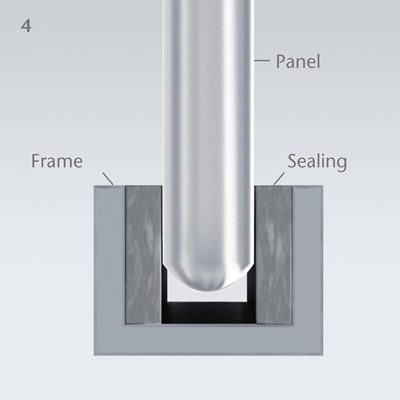
- As a marginal torsion of the frame construction cannot be excluded, it must be prevented that this torsion is transmitted onto the ROBAX® panel by using a thermally stable, permanently elastic sealing (such as fiberglass or mineral fiber fabrics).
- If – due to constructive reasons – the pressing of the fire-viewing panel in the frame is inevitable, then the contact pressure must be evenly distributed (never at single points) over the circumference of the panel.
- The panel must not come into direct contact with metal frame parts. Also here, it is recommended to use a thermally stable, permanently elastic seal.
- Additionally, the instructions of the seal manufacturers must be followed, particularly with regard to contact pressure of materials.
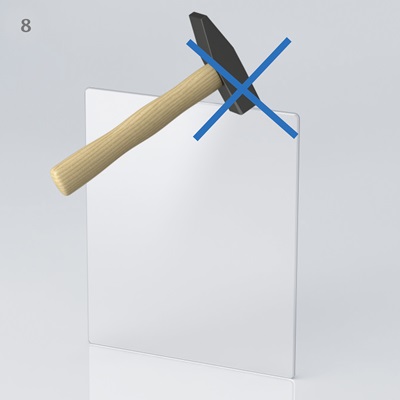
- During installation, it is essential to protect the glass-ceramic panel from potential damage (impacts, bumps and scratches), especially the edge areas.
- Generally, SCHOTT advises against gluing the fire-viewing panel. Nevertheless, if a high-temperature-resistant silicone is applied circumferentially on the panel, the elastic limit of the silicone must be considered. Due to the excellent bonding properties of glass to silicone, exceeding the elastic limit can lead to cracked or broken glass-ceramic panels. Punctual gluing with high temperature-resistant silicone is possible for sealing purposes.
Yes. We offers comprehensive technical and application support for fireplace manufacturers through its dedicated Application Lab. Our experts can help analyze and optimize fireplace solutions, including the performance of functional coatings, temperature distribution across the fire-viewing panel, emissions, mounting conditions, and frame design. Support can also include workshops, training, joint development work and assistance with specific technical questions or complaint cases. Following an initial consultation to understand your technical requirements and development goals, the ROBAX® team can recommend suitable testing and support services and prepare a tailored offer.

As fireplace manufacturer, you can contact SCHOTT directly through the contact form on the ROBAX® website. The local ROBAX® team will help you find the right product and can provide further information, samples, a quotation, or technical advice for your project.
For replacement panels or small quantities, please contact a local specialist dealer or glass processor, as SCHOTT primarily supplies ROBAX® to commercial customers and processing partners.
Always allow the fireplace and the ROBAX® fire-viewing panel to cool completely before cleaning. For uncoated panels, the ROBAX® Dry Wiper can be used dry to remove soot without water or cleaning agents. Wipe the surface with the grey side, then gently tap out the soot. Do not wash or moisten the Dry Wiper.
Coated ROBAX® panels require special care. Clean coated surfaces only with a soft cloth and avoid scouring pads, abrasive cleaners, or scouring agents, as these may damage the coating. Always follow the cleaning instructions provided by the fireplace manufacturer.
Dirt, soot and ash cannot be completely prevented in a wood-burning fireplace. However, ROBAX NightFlame® can make them much less visible. The semi-transparent black glass-ceramic provides an almost identical view of the flames while the fire is burning. Once the fire is out, its dead-front effect discreetly conceals residues and dirt inside the combustion chamber, helping the fireplace maintain a clean and elegant appearance for longer.
ROBAX® IR SuperMax can help prevent your living space from overheating. Its heat-reflective coating reflects significantly more infrared radiation back into the combustion chamber, allowing less heat to pass through the fire-viewing panel into the room. This helps maintain a more comfortable room temperature, particularly in well-insulated low-energy and passive houses.
At the same time, the higher panel temperature can create a pyrolysis-like effect, helping to reduce soot deposits and keep the fire-viewing panel cleaner for longer. The actual effect depends on the fireplace design, installation, fuel quality and usage conditions.
ROBAX® fire-viewing panels are designed for demanding fireplace conditions, and breakage is uncommon. However, damage still can occur as a result of external mechanical impact.
Since SCHOTT supplies ROBAX® panels in larger quantities to fireplace manufacturers and processing partners rather than directly to end consumers, please contact the manufacturer or supplier of your fireplace first. They can identify the correct replacement panel and advise you on safe, professional installation. A damaged or cracked panel should no longer be used.
Downloads for ROBAX®
Datasheets


Customer success powered by ROBAX®






Want to know more? Let's talk!
Whether you need more information, samples, a quote, or advice for a project, I would be delighted to talk to you.

Birgit Eickeler

Want to know more? Let's talk!
Please send any questions or requests by using the contact form.