Endoscopy
Advanced visualization in minimally invasive medicine
Modern endoscopes require a high-performance optical path, precise illumination, durable interfaces, and components that function reliably under demanding clinical conditions.For standard imaging, endoscopes use broad-spectrum visible light to illuminate the area under examination, providing a clear, natural-looking view of tissue and anatomical structures. A camera or optical image guide transmits images from inside the body, giving the clinician a complete view of the area. Autoclavable connector interfaces are also important components because they ensure safe and reliable power transmission, even after repeated sterilization cycles.
At SCHOTT, we take a holistic approach to endoscope development, ensuring the illumination and imaging systems work together seamlessly to provide clinicians with reliable, high-resolution visibility during procedures.
Every component is developed with integration in mind. Optical performance, mechanical robustness, and long-term reliability come together to enhance advanced endoscopy systems in real-world applications.
Why choose SCHOTT?
With expertise in glass, optics, and hermetic sealing, we provide solutions that ensure quality and reliability.

The optical path of an endoscope
The optical path is at the heart of the endoscope, guiding light and images through a series of components to deliver clear, reliable visualization inside the body. For reusable endoscopes, fiber optic light guides are ideal for delivering bright and focused illumination from the external light source to the endoscope and within the scope itself. Our single-use light guides offer a cost-effective solution for disposable endoscope platforms.For image transmission, flexible fiber optic image guides and rod lenses can deliver razor-sharp images of the body’s interior to the surgeon. Additionally, our fiber optic tapers optimize light coupling into the endoscope, helping deliver brighter, clearer images.
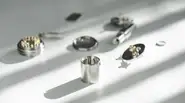
SCHOTT’s hermetically sealed glass-to-metal connectors for light, image, and electrical signals ensure reliable transmission. Our autoclavable sapphire windows at the distal end provide optical clarity, even after repeated sterilization cycles.
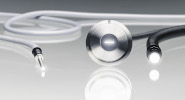
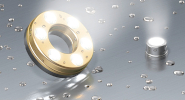
For some applications, illumination is provided by LEDs located at the distal tip of the endoscope. Hermetically sealed Solidur® LEDs combine high light output with autoclave resistance, helping create compact, high-performance endoscope systems.
Why glass is best
Specialty glass is widely used in medical devices because it can be engineered to meet a broad range of optical and performance requirements. In endoscopy, specialty glass enables exceptionally clear and detailed images, remains stable even after frequent cleaning and sterilization processes, and, unlike other materials, maintains its properties over long periods of time. Its biocompatibility, along with high UV and laser resistance, makes glass ideal for diagnostic and therapeutic applications. The advantages of glass can be seen throughout the components making up an endoscope. For example, flexible light and image guides made of glass optical fibers enable efficient light and image transmission within a compact instrument. Rigid rod lenses ensure consistently high quality imaging. Hermetically sealed glass-to-metal connectors provide lasting protection for electronics against corrosion, condensation, and electrical leakage. Through this interplay, glass makes a decisive contribution to the performance, reliability, and longevity of modern endoscopes.
Fiber optic light and image conductors
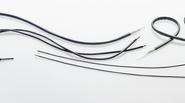
Fiber optic light guides from SCHOTT deliver precise and bright illumination for endoscopy, with cost-effective single-use solutions available.
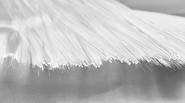
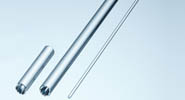
Flexible image guides transmit high-resolution images from inside the body, while fiber optic tapers maximize light output in the endoscope, ensuring highly efficient imaging.
Thanks to their excellent light transmission and long service life, PURAVIS® glass fibers offer developers maximum design flexibility for lighting solutions across a wide range of applications.

High-precision rod lenses
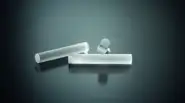
For rigid endoscopes such as laparoscopes, rod lenses are key for transmitting light with exceptional precision. SCHOTT manufactures rod lenses using vertically integrated processes that span glass melting in Germany through processing and coating in Malaysia, ensuring consistent optical performance.Manufactured from MDR- and RoHS-compliant materials, the lenses deliver high transmission, excellent contrast, and stable optical properties across all batches. Automated quality control, large-scale production, as well as customer-specific coatings and rapid prototyping, ensure reliable precision and application-oriented engineering.

Hermetic connectors and housing solutions
Moisture ingress during sterilization is one of the greatest challenges for reusable endoscopes. SCHOTT addresses this issue with hermetically sealed connectors, sapphire windows, and housing solutions that reliably protect sensitive electronics.
Our glass-to-metal sealed connectors ensure secure transmission for light, images, and electrical signals. Sapphire windows at the distal end provide durability and optical clarity, while transition plates isolate the instrument’s handle from the cable assembly. In addition, redundant fiber sealing systems prevent moisture diffusion during sterilization.
SCHOTT also offers the Solidur® Mini LED, a compact and robust encapsulated light module designed to withstand demanding environmental conditions and repeated sterilization processes.

Rigid and flexible endoscopes
Rigid endoscope

Flexible endoscope

FAQs about endoscopy and SCHOTT components
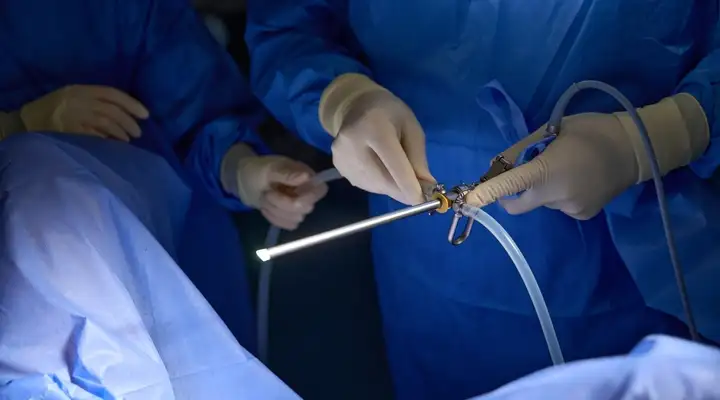
An endoscope is a medical instrument used for the minimally invasive examination and treatment of internal body structures. It enables physicians to observe and treat tissues and organs without the need for major surgical procedures.
Rigid endoscopes are primarily used in surgery, where stable and high quality imaging is essential. Flexible endoscopes are suitable for examinations in difficult-to-access areas, such as the gastrointestinal tract.
Rod lenses transmit light focused and with minimal loss, ensuring clear, high-contrast imaging in rigid endoscopes.
Fiber optic light guides are key components of endoscopes, performing several key functions:
- transmitting light from an external light source to the endoscope (light guide cable)
- effectively illuminating the surgical field (internal fiber bundles), and
- optimizing light transmission into the endoscope (fiber optic taper).
SCHOTT’s light guides are made from PURAVIS® glass fibers, ensuring pure, homogeneous white light and, enabling bright illumination with a natural color reproduction.
Hermetically sealed connectors protect the sensitive electronics in the endoscope from moisture and ensure reliable operation even under sterilization conditions such as autoclaving.
Specialty glass is resistant to aging, corrosion-free, and protects against condensation. It prevents electrical leakage and short circuits, thereby increasing the lifespan and reliability of medical devices.
Yes, SCHOTT offers rapid prototyping and supports customers from design through series production. Our optimized coatings and materials can be tailored to meet specific applications or design needs.
In contrast to non-hermetic plastic connectors, hermetically sealed glass-to-metal connectors are used when a gas-tight barrier and reliable protection against moisture, chemicals, and environmental influences are required. They offer a robust, durable seal with high optical and mechanical stability.
Hermetic windows and lenses provide a gas-tight barrier that reliably protects optical components from water, moisture, chemicals, and mechanical influences. They ensure a long operational life, stable optical properties, and high light transmission across the entire spectrum.
- LEDs can be integrated either at the tip of the endoscope or in the handle, depending on design requirements and application.
- LEDs with hermetically sealed housings can withstand repeated autoclave cycles, ensuring high reliability in medical applications.
- For customer-specific designs, LEDs are available in customizable sizes, chip configurations, and optical properties, supporting the development of compact high-performance endoscopy solutions.
- transmitting light from an external light source to the endoscope (light guide cable)
- effectively illuminating the surgical field (internal fiber bundles), and
- optimizing light transmission into the endoscope (fiber optic taper).
SCHOTT’s light guides are made from PURAVIS® glass fibers, ensuring pure, homogeneous white light and, enabling bright illumination with a natural color reproduction.
- LEDs can be integrated either at the tip of the endoscope or in the handle, depending on design requirements and application.
- LEDs with hermetically sealed housings can withstand repeated autoclave cycles, ensuring high reliability in medical applications.
- For customer-specific designs, LEDs are available in customizable sizes, chip configurations, and optical properties, supporting the development of compact high-performance endoscopy solutions.