ZERODUR® Low thermal expansion glass-ceramic
ZERODUR® glass-ceramic has been one of SCHOTT's most unique and extraordinary products for over 50 years. With an extremely low thermal expansion, it's essential for a large number of demanding high-tech applications requiring exceptional precision.

 A window into distant galaxies
 Enabling the future of gravitational-wave astronomy
 Expert insights on ZERODUR®
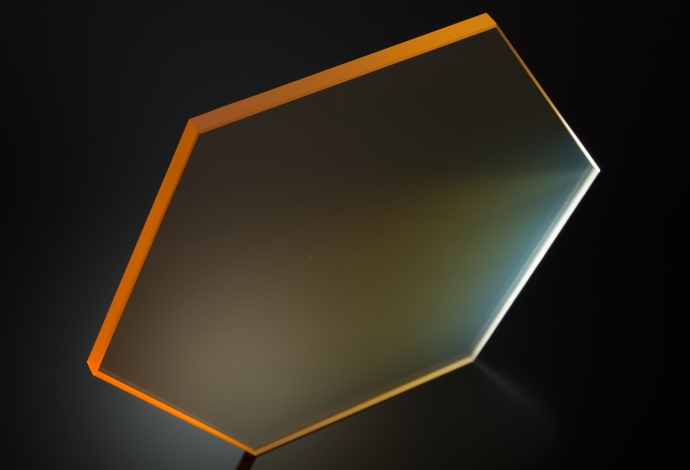
Highly accurate under extreme conditions
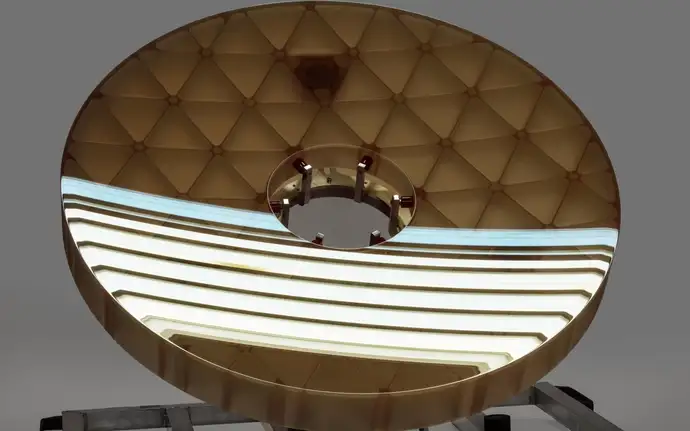
Impressive machinability from small to large
Low thermal expansion even in harsh environments
The inorganic, non-porous lithium aluminum silicon oxide glass-ceramic, ZERODUR® is characterized by its extremely low thermal expansion, which is homogeneous throughout the entire volume. Additionally, it possesses a very low rate of imperfections, high strength compared to other glass-ceramics and is transparent to visible light. Smooth surfaces with a roughness in the sub-nm range are also achievable.


Technical details of ZERODUR®
For several decades, the unique technical properties of ZERODUR® glass-ceramic have made it ideal for a vast range of applications that rely on exceptionally low thermal expansion materials. It's also now the industry standard for ultra-precise mirror substrates in astronomy.
CTE tolerances of ZERODUR®
By default, the mean coefficient of thermal expansion (CTE) of ZERODUR® is measured within the temperature range of 0°C to 50°C. Five expansion classes are differentiated as follows:
|
CTE Grades |
CTE (0°C; 50°C)* |
|---|---|
|
ZERODUR® Expansion Class 2 |
0 ± 0.100 ・ 10-6/K |
|
ZERODUR® Expansion Class 1 |
0 ± 0.050 ・ 10-6/K |
|
ZERODUR® Expansion Class 0 |
0 ± 0.020 ・ 10-6/K |
|
ZERODUR® Expansion Class 0 SPECIAL |
0 ± 0.010 ・ 10-6/K |
|
ZERODUR® Expansion Class 0 EXTREME |
0 ± 0.007 ・ 10-6/K |
|
ZERODUR® TAILORED |
TAILORED ± 0.020・10-6/K |
*CTE (0°C; 50°C) describes the linear mean coefficient of thermal expansion in the temperature 0°C to 50°C.
Maximum application temperature 600°C.
Upon request, ZERODUR® is available for customized temperature ranges.
We offer expansion class 0 or better optimized for your individual application.
CTE homogeneity
Homogeneity is evaluated by measuring CTE samples homogeneously distributed throughout the blank and calculating the difference in CTE between the highest and the lowest value measured.
The homogeneity of linear expansion can be guaranteed in the following weight classes:
CTE (0°C; 50°C) Homogeneity Tolerances
-
up to 18 tons: < 0.03 ・ 10-6/K
-
up to 6 tons: < 0.02 ・ 10-6/K
-
up to 0.3 tons: < 0.01 ・ 10-6/K
CTE distribution within a 1.5 m diameter blank with a measured CTE homogeneity of 0.004 · 10-6/K
CTE tolerances of ZERODUR® K20
ZERODUR® K20, a high-temperature version of ZERODUR®, has been optimized to withstand higher application temperatures.
Mean coefficient of linear thermal expansion of ZERODUR® K20
-
CTE (20°C; 700°C): 2.4・10-6/K
-
CTE (20°C; 300°C): 2.2・10-6/K
-
CTE (0°C; 50°C): 1.6 ・ 10-6/K
Maximum application temperature 850°C.
If no quality is specified upon receipt of an order, then ZERODUR® will be supplied in standard quality. Individual specifications for internal quality can be fulfilled upon request.
Inclusions
Although the defect level is low, the main inclusions found in ZERODUR® are bubbles. During inspection of ZERODUR® parts, all inclusions with a diameter > 0.3 mm are taken into consideration. If an inclusion has a shape other than spherical, the average diameter is reported as the mean of the length and width. ZERODUR® is available in six different inclusion quality levels, which are defined according to the dimension of your part.
Quality levels for inclusions in ZERODUR®
Average number of inclusions per 100 cm3:
|
Standard |
5.0 |
|---|---|
|
Class 4 |
5.0 |
|
Class 3 |
4.0 |
|
Class 2 |
3.0 |
|
Class 1 |
2.0 |
|
Class 0 |
1.0 |
Maximum diameter of individual inclusions in mm for different diameters or diagonals of the ZERODUR® part:
|
In the critical volume |
< 500 mm |
< 2000 mm |
< 4000 mm |
|---|---|---|---|
|
Standard |
1.4 |
2.0 |
3.0 |
|
Class 4 |
1.2 |
1.8 |
2.5 |
|
Class 3 |
1.0 |
1.6 |
2.0 |
|
Class 2 |
0.8 |
1.5 |
1.8 |
|
Class 1 |
0.6 |
1.2 |
1.6 |
|
Class 0 |
0.4 |
1.0 |
1.5 |
|
In the uncritical volume |
< 500 mm |
< 2000 mm |
< 4000 mm |
|---|---|---|---|
|
Standard |
3.0 |
6.0 |
10.0 |
|
Class 4 |
2.0 |
5.0 |
8.0 |
|
Class 3 |
1.5 |
4.0 |
6.0 |
|
Class 2 |
1.0 |
3.0 |
6.0 |
|
Class 1 |
0.8 |
3.0 |
6.0 |
|
Class 0 |
0.6 |
3.0 |
6.0 |
Individual specifications upon request.
Bulk stress
The bulk stress birefringence of ZERODUR® is recorded in path difference per thickness in inspection direction. For discs it is measured in axial direction at 5 % of the diameter from the edge. For rectangular plates, the measurement is performed in the middle of the longer side perpendicular to the plate‘s surface.
Quality levels for bulk stress in ZERODUR®
Bulk stress birefringence [nm/cm] for parts with diameters or diagonals:
|
|
< 500 mm |
< 2000 mm |
< 4000 mm |
|---|---|---|---|
|
Standard |
6 |
12 |
15 |
|
Class 4 |
4 |
10 |
12 |
Individual specifications upon request
Striae
Additionally to the bulk stress birefringence, the stress birefringence induced by local striae is classified as a function of part diameter.
Stress birefringence caused by striae [nm/striae] for parts with diameters or diagonals:
|
|
< 500 mm |
< 2000 mm |
< 4000 mm |
|---|---|---|---|
|
Standard |
60 |
60 |
60 |
|
Class 4 |
45 |
45 |
45 |
|
Class 3 |
30 |
30 |
30 |
|
Class 2 |
5 |
30 |
30 |
|
Class 1 |
- |
5 |
30 |
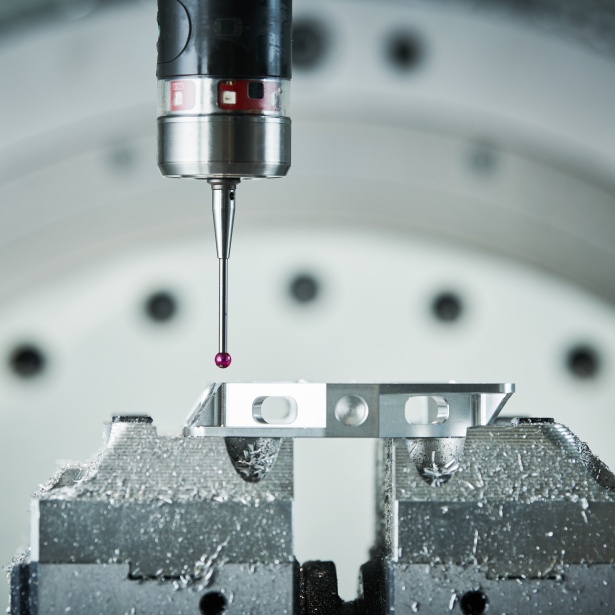
ZERODUR® is processed into complex geometries based on technical drawings and specifications from our customers. Our application and process engineers support you during the design phase of your product to get the most out of the ZERODUR® properties for your individual application. We also provide finite-element modelling and special quality requirements upon request.
5-axis CNC grinding machines allow for precise fabrication of ZERODUR® parts up to 4.25 m in diameter. The highlight of ZERODUR® processing is its light-weighting by grinding challenging aspect ratios of pocket heights to rib thickness used for parts with strict weight requirements.
By single-side and double-side polishing, we offer different surface-quality grades for dimensions up to 500 mm. Depending on the size of your part, a roughness down to the sub-nanometer range can be achieved.
As ZERODUR® acts as a very good substrate for coating, several coatings from standard aluminum to complex customized coatings are available for parts smaller than 300 mm. Our coating experts are ready to support you in choosing the coating that matches your specifications best.
Proposed CNC grinding tolerances for dimensions and shapes
|
Dimension < 2000 mm |
Tolerances [mm] |
Thighter tolerances [mm]* |
|---|---|---|
|
Length, width, height |
± 0.3 |
± 0.1 |
|
Diameter |
± 0.3 |
± 0.1 |
|
Angle |
± 5’ |
± 1’ |
|
Flatness ** |
0.1 - 0.2 |
0.1 |
|
Cylindricity ** |
0.1 |
0.1 |
|
Profile ** |
0.2 |
0.1 |
|
Parallelism ** |
0.1 - 0.2 |
0.1 |
|
Position ** |
0.1 |
0.1 |
|
Concentricity ** |
0.1 |
0.1 |
|
Run-out ** |
0.1 |
0.1 |
* tighter tolerances depend on the size and geometry. They cannot be combined freely.
** according ISO 1101
|
Dimension ≤ 4000 mm |
Tolerances [mm] |
Thighter tolerances [mm]* |
|---|---|---|
|
Length, width, height |
± 0.4 |
± 0.2 |
|
Diameter |
± 0.4 |
± 0.2 |
|
Angle |
± 5’ |
± 1’ |
|
Flatness ** |
0.2 |
0.1 |
|
Cylindricity ** |
0.2 |
0.1 |
|
Profile ** |
0.4 |
0.2 |
|
Parallelism ** |
0.2 |
0.1 |
|
Position ** |
0.2 |
0.1 |
|
Concentricity ** |
0.2 |
0.1 |
|
Run-out ** |
0.2 |
0.1 |
* tighter tolerances depend on the size and geometry. They cannot be combined freely.
** according ISO 1101
Bending stress and lifetime calculation
ZERODUR® is the material of choice when it comes to excellent thermal properties and precision in high-tech applications. Often these applications also require to withstand certain mechanical loads, such as continuously as in telescope mirror holders or short-term during rocket launch.
The key factor to be evaluated to quantify the breakage stress of ZERODUR® is the surface quality, especially the occurrence of microcracks. In general, applying loads below 10 MPa tensile stress does not demand any special breakage analysis of ZERODUR®.
SCHOTT’s exhaustive data on the breakage events of ground ZERODUR® samples has shown that it can withstand long-term (tens of years) mechanical loads of 30 to 100 MPa. This is much higher than previously predicted. Using a three-parameter Weibull distribution, we are happy to discuss the ZERODUR® lifetime under your individual long-term mechanical loads.
Typical mechanical and optical properties
|
ZERODUR® |
ZERODUR® K20 |
|
|---|---|---|
|
Thermal conductivity λ at 20°C [W/(m・K)] |
1.46 |
1.63 |
|
Thermal diffusivity index a at 20°C [10-6m2/s] |
0.72 |
- |
|
Heat capacity cp at 20°C [J/(g · K)] |
0.80 |
0.90 |
|
Young's modulus E at 20°C [GPa]-mean value |
90.3 |
84.7 |
|
Poisson‘s ratio |
0.24 |
0.25 |
|
Density ρ [g/cm3] |
2.53 |
2.53 |
|
Knoop Hardness HK 0.1/20 (ISO9385) |
620 |
620 |
|
Refractive index nd |
1.5424 |
- |
|
Abbe number νd |
56.1 |
- |
|
Internal transmittance Ti at 580 nm / 5 mm thickness |
0.95 |
- |
|
Internal transmittance Ti at 580 nm / 10 mm thickness |
0.9 |
- |
|
Stress optical coefficient K at λ = 589.3 nm [10-6MPa-1] |
3 |
- |
|
Electrical resistivity ρ at 20°C [Ω · cm] |
2.6 · 1013 |
- |
|
Tk100 [°C], Temperature for ρ = 108 [Ω · cm] |
178 |
- |
At room temperature, most acids, alkalis, salts and dye solutions leave no residual traces on ZERODUR® surfaces. It can be etched by hydrofluoric acid as well as concentrated sulfuric acid at elevated temperatures. Furthermore, construction materials such as mica, chamotte, MgO and SiO2 do not react noticeably with ZERODUR® (up to 600°C for 5 h). By contrast, enamel reacts above 560°C by having its surface destroyed.
Based on the good chemical resistance of the material, coatings such as mirrors are removable in a reproducible manner. The polished surface is simply cleaned and recoated by an optimized protocol.
Typical chemical properties
|
|
ZERODUR® |
ZERODUR® K20 |
|---|---|---|
|
Hydrolytic resistance class (ISO 719) |
HGB 1 |
- |
|
Acid resistance class (ISO 8424) |
1.0 |
- |
|
Alkali resistance class (ISO 10629) |
1.0 |
- |
|
Climate resistance |
Class 1 |
- |
|
Stain resistance |
Class 0 |
- |
|
Helium permeability [Atoms/(cm · s · bar)] at 20°C |
1.6 · 106 |
- |
|
Helium permeability [Atoms/(cm · s · bar)] at 100°C |
5.0 · 107 |
- |
|
Helium permeability [Atoms/(cm · s · bar)] at 200°C |
7.2 · 108 |
- |
FAQs
ZERODUR® combines near-zero thermal expansion and exceptional homogeneity, making it ideal for applications where precision must remain unchanged over time and temperature.
Even small temperature changes can cause materials to expand or contract. ZERODUR® minimizes these effects, helping optical and measurement systems maintain accuracy under changing environmental conditions.
ZERODUR® is used in space optics, astronomical telescopes, semiconductor lithography, metrology systems, ring laser gyroscopes, and other high-precision applications.
Yes. Different expansion classes and tailored material variants allow ZERODUR® to be optimized for specific temperature ranges and performance requirements.
Yes. Advanced CNC machining enables complex 3D geometries, lightweighted mirror structures, drilled features, and application-specific designs while maintaining exceptional precision.
Depending on the design, ZERODUR® mirror substrates can be lightweighted by up to 90% while maintaining excellent stiffness and dimensional stability.
Downloads for ZERODUR®
Datasheets






Want to know more? Let's talk!
Whether you need more information, samples, a quote, or advice for a project, I would be delighted to talk to you.

Want to know more? Let's talk!
Please send any questions or requests by using the contact form.